

Syngonium chiapense is a showstopping plant with heart-shaped, intensely dark green, matte leaves.
It is pretty easy to care for and thrives in a little less light than many other aroids.
In this post we will talk about:
- How to grow Syngonium chiapense successfully
- How to create a full, bushy plant
- And where you can buy a healthy Syngonium chiapense to add to your collection!
Syngonium chiapense sticks out from most other syngoniums, which are known for their arrowhead shape and thinner leaf texture.
This plant is much more robust and its leaves have soft curves instead of points.
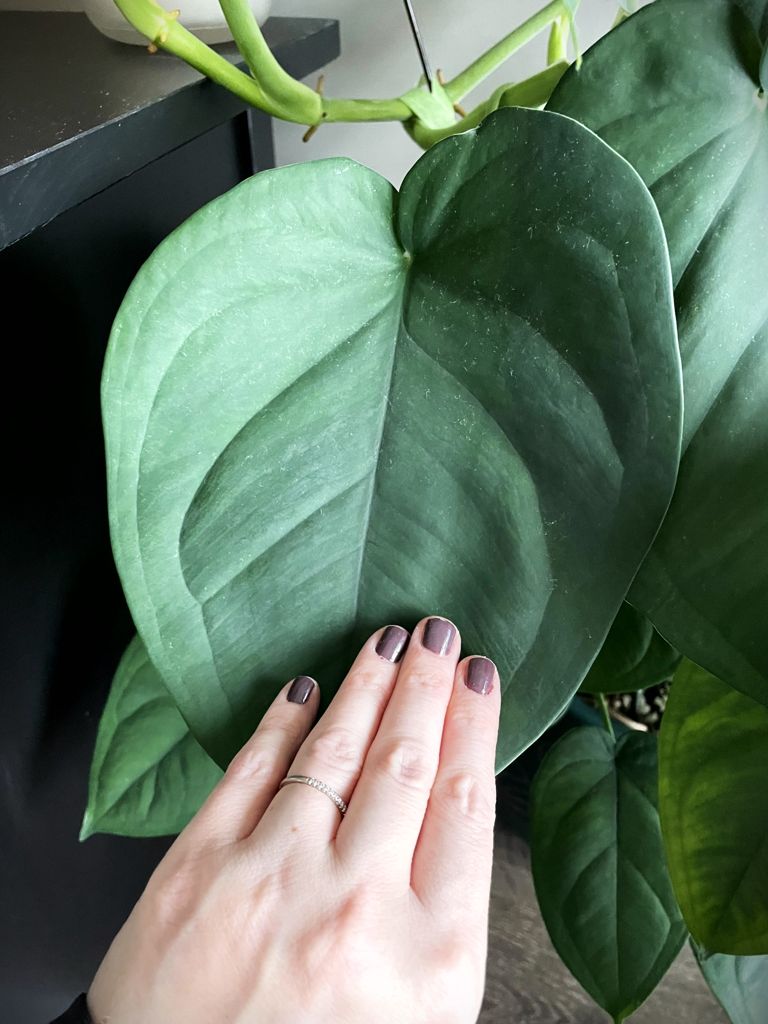
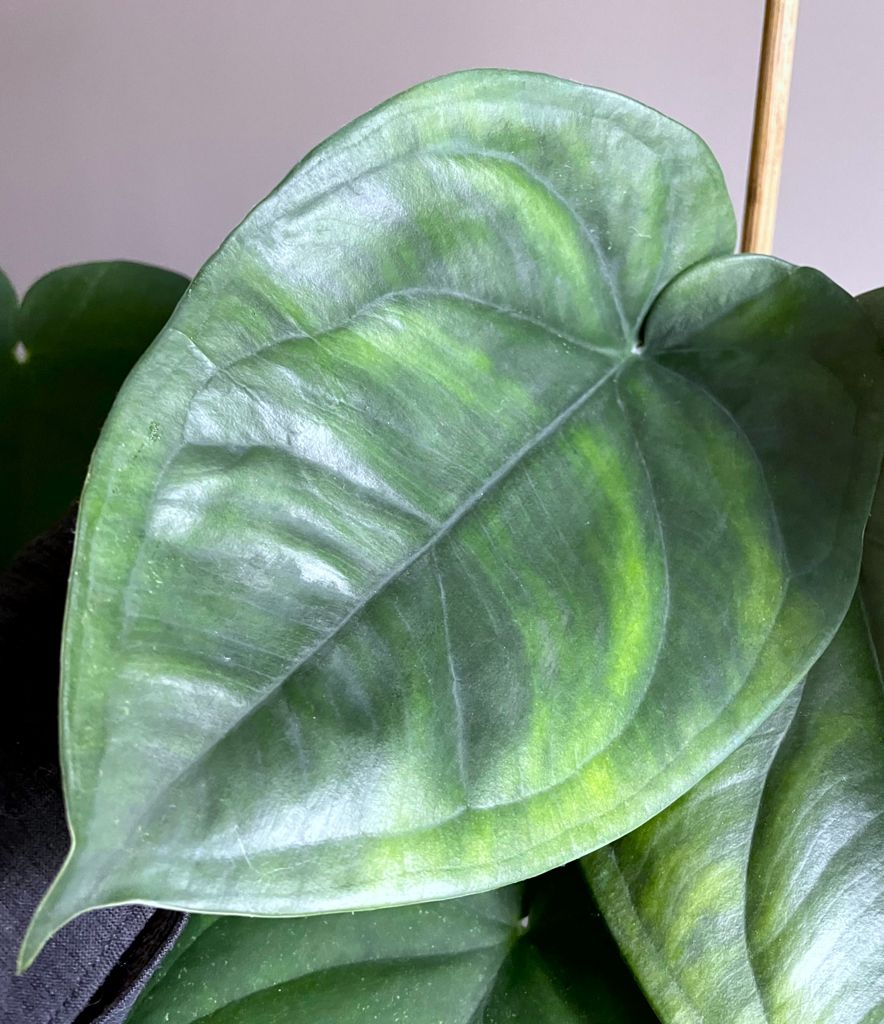
The leaf on the left (below) has been receiving less light than the leaf on the right. The amount of light changes how deep the green of the leaf is, but both look thick and healthy.
Normally the right leaf would be matte as well, but I wiped a lot of the dust off to take a picture, making the leaf very shiny.
I did not wipe the dust off of the leaf on the left. You can see the difference (and the dust!) 🙂
Here’s an example of a more common Syngonium with the classic arrowhead shape. This one is called ‘Panda Galaxy.’ What a name!
Both are very beautiful, but certainly different.
Regardless of size, Syngonium chiapense is a stunning plant.
Here’s a picture of a baby plant to show how lovely they are even when tiny:
There is another syngonium that looks very similar, Syngonium macrophyllum.
The leaves of Syngonium macrophyllum look like someone took a Syngonium chiapense leaf and stretched it a bit, to make a thinner, lankier heart. The veins on Syngonium macrophyllym seem less pronounced to me.
And the leaves are not quite as robust, at least that was true on the plant I’ve grown in the past.
Both are enjoyable to grow, but when forced to choose I prefer Syngonium chiapense.
Syngonium macrophyllum is shown below.
Now variegated plants of Syngonium chiapense are circulating the market and they are absolutely beautiful.
When I began to grow this plant, I had never heard of such a thing.
Check out one of these beautiful plants below. I would absolutely try growing this one if I stumbled on the opportunity.
There is another Syngonium chiapense variety called ‘Frosted Heart’. It was very popular a year or two ago.
I never really enjoyed the appearance or got the hype, but many people love this plant, so I figured it was worth mentioning.
‘Frosted Heart’, due to its popularity, is fairly easy to find these days. In fact, it is easier to find than the basic green variety.
Syngonium chiapense: Plant Care Tips
Expectations – How to achieve a full, bushy plant with large leaves
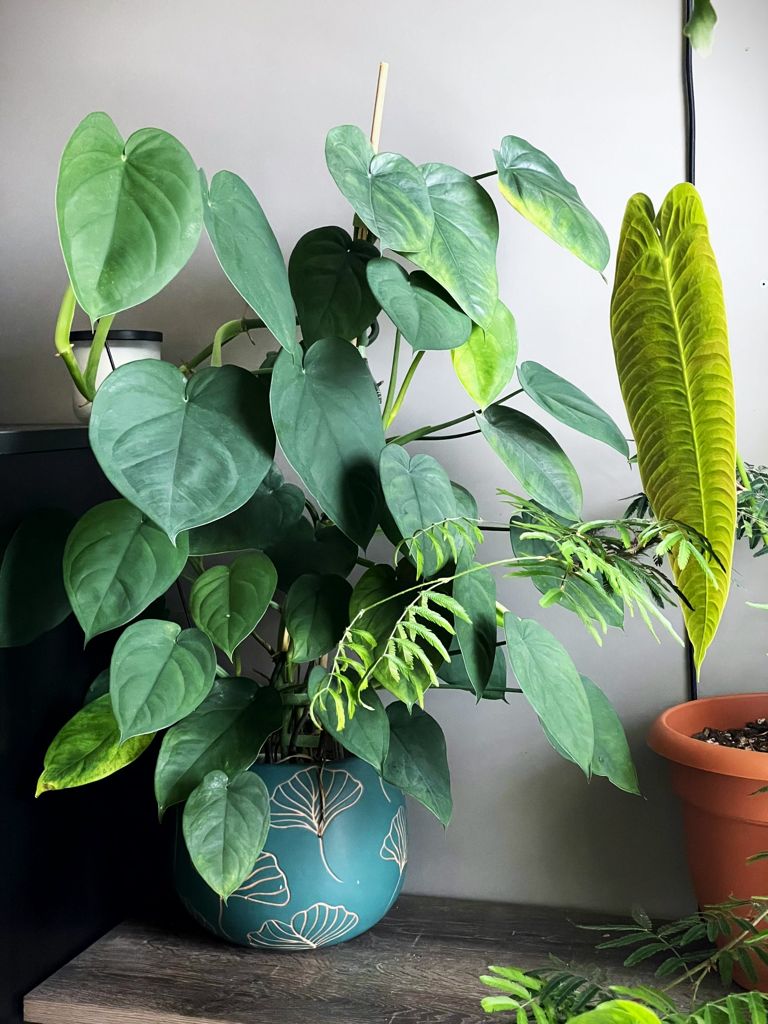
In my opinion, Syngonium chiapense must be grown with support to be attractive. Without support, the leaves remain small and the space between leaves on the vine (or internodal spacing) is quite large.
When grown on a pole, trellis, or stake, the leaves size up beautifully and the internodal spacing (provided the plant receives enough light) remains tight and attractive.
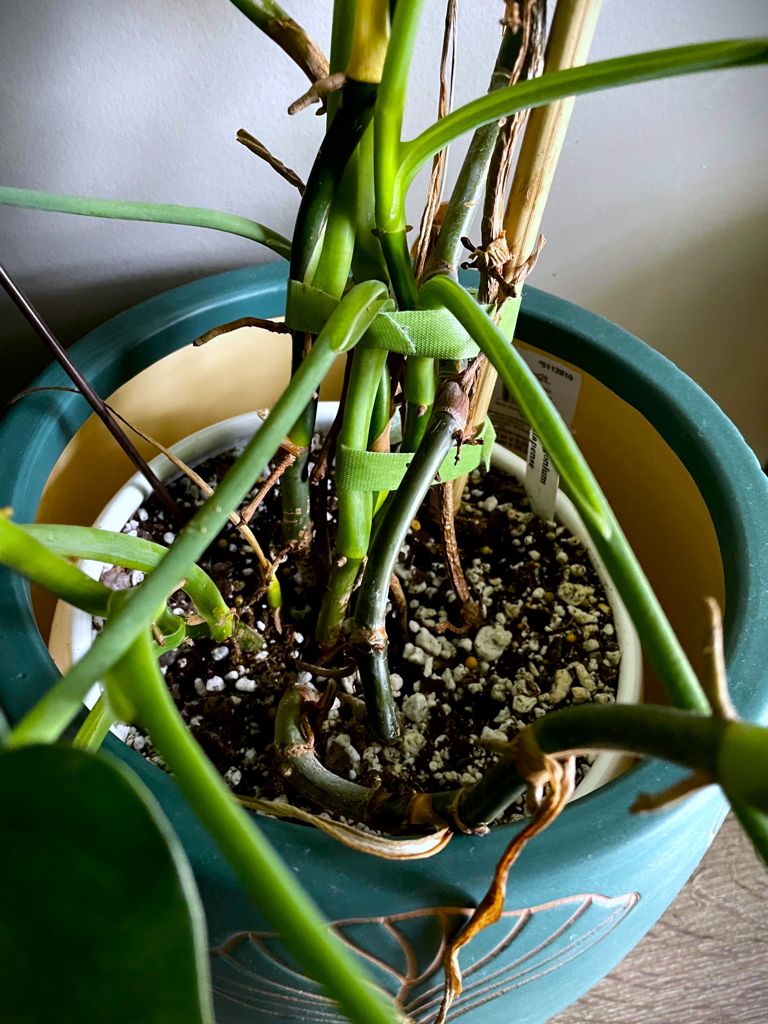
Another key to success is to grow multiple rooted vines in a pot.
While one vine or rooted plant can look okay, the plant looks most attractive when full and bushy. To achieve this look, multiple rooted vines are needed.
The plant can be easily propagated by cutting anywhere along the vine and pushing the vine into the pot so it can take root with its friends.
Not every cutting will successfully root, but most do in my experience. That is how I’ve achieved such a busy plant.
Light
Syngonium chiapense needs a good amount of light, but not as much as many other aroids or syngoniums for that matter.
For example, Syngonium podophyllum albo variegata wants a large amount of light throughout the day to support its variegation and leaf size.
Syngonium chiapense doesn’t need or want that. The same amount of light for Syngonium chiapense will start to fade the leaves and detract from its gorgeous deep green appearance.
If you look at my plant, the leaves in the upper righthand side show yellowing. That’s because they were getting too much light from the growlight above it. I’ve been trying to back the plant away from the grow light as much as I can.
This plant doesn’t really need the grow light at all. The grow light mounted here is really meant for supporting other aroids and some amazing calliandras I have.
To summarize, S. chiapense doesn’t want low light, but it certainly doesn’t need the brightest light in a super sunny window either.
Watering
Syngonium chiapense needs regular watering. It does not want to be dry.
If it does go dry for long, the lower leaves will begin to die back and spider mites or thrips will move in (if they are around).
I saw someone else giving the advice that Syngonium chiapense is okay with being dry and will still be happy and grow for you.
I completely disagree. It might survive. It’s not going to be happy or look happy, in my experience.
So, if the bottom of your vines are becoming bare because the lower leaves are dying back, I can almost guarantee its due to lack of water.
Potting Mix and Planter
As mentioned above, Syngonium chiapense doesn’t want to dry out and stay dry. To help prevent the plant from drying out too quickly, I prefer a plastic or ceramic pot that is an inch or two larger than its root ball.
If you want to use a larger planter than recommended, I would add a whole lot of drainage to the potting mix to compensate so it doesn’t stay wet for too long and monitor the situation carefully.
My preferred potting soil currently is Fox Farm Ocean Forest Potting Soil (linked to Amazon*), which already has a light, airy texture thanks to the wonderful ingredients.
You could add some coarse pumice or orchid bark for additional drainage to ensure the plant’s roots get the aeration needed.
When I repot mine I most likely won’t add any, but I am an underwater-er and don’t worry as much about the plant maintaining too much moisture.
*When you buy through links on my site, I may earn an affiliate commission at no cost to you. I only recommend products I use and love. All proceeds go back to supporting this blog. Thanks for your support!
Fertilization
Syngonium chiapense needs regular fertilization to maintain optimum growth and health. It can survive without fertilization, but you will not have as robust or beautiful growth.
Any houseplant fertilizer will work as long as the directions on the package are followed.
Or you can apply less than the recommended amount to ensure the plant isn’t over-fertilized.
Either way works well for me!
Pests
This isn’t the most pest-prone plant, but pests will migrate to this plant from surrounding plants or when stressed due to underwatering.
My plant has had spider mites and thrips.
Pests on Syngonium chiapense have been fairly easy to manage by simply washing off the leaves with water, manually spraying infested leaves with insectidal soap or a similar product.
Then I check it over regularly and spot treat as needed.
If you’ve had other experiences with this plant and pests, I would love to hear them. Let me know in the comments below.
Pruning
This plant responds really well to pruning.
I highly recommend pruning, especially if you would like to create a fuller, bushier plant.
The cuttings can be placed back in the potting mix to grow new plants to make a fuller pot.
Where I Would Buy It Online
Syngonium chiapense ‘Frosted Heart’ on Etsy
*When you buy through links on my site, I may earn an affiliate commission at no cost to you. I only recommend products I use and love. All proceeds go back to supporting this blog. Thanks for your support!
Disclaimer
This advice may not work for every houseplant grower, but it works for me and my plants!
If you do something different that works better for you, share it in the comments below!
That’s how we learn and grow as a community.
Related Posts
Monstera adansonii: How to Care for It (& Avoid Leaf Spotting!)
Here’s Why Your Plant’s Roots are More Important than Anything Else.
0 Comments