


For many of us, Spring has sprung and our houseplants know it!
Our plants are waking up and beginning to push out new leaves and possibly even blooms.
But it isn’t just our plants waking up! The pests are also stirring from their winter rest, so we need to be on the lookout for them.
This post will cover the key clues to look for when monitoring for pests while observing and enjoying your plants.
Clue #1: Shiny, Sticky Spots
Shiny, sticky spots on plants are often the result of pests that like the suck on the leaves and stems. In the process of eating the plant, they produce something called honeydew, which is the sticky stuff that you find.
If there is enough honeydew left on the plant, this can attract ants (as they like the honeydew) and encourage the growth black mold.
Common Culprits: Mealybugs, Scale, and Aphids

Clue #2: Yellow dots, speckling, or stipling
Tiny yellow dots that are particularly apparent when light shines through the leaf are often the work of spider mites as they feed on tiny portions of the leaf.
As the infestion grows, the numbers of dots or speckling will grow infinitely covering a lot of the leaf.
Common Culprits: Spider mites

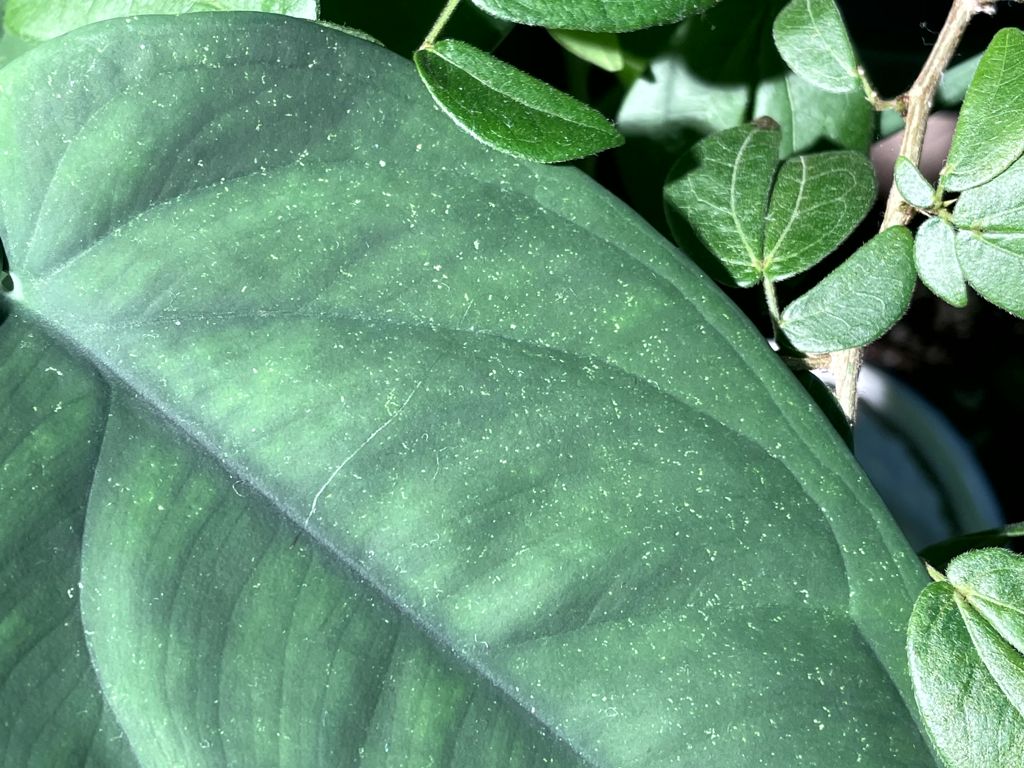
Clue #3: Dimpling and distorting leaves
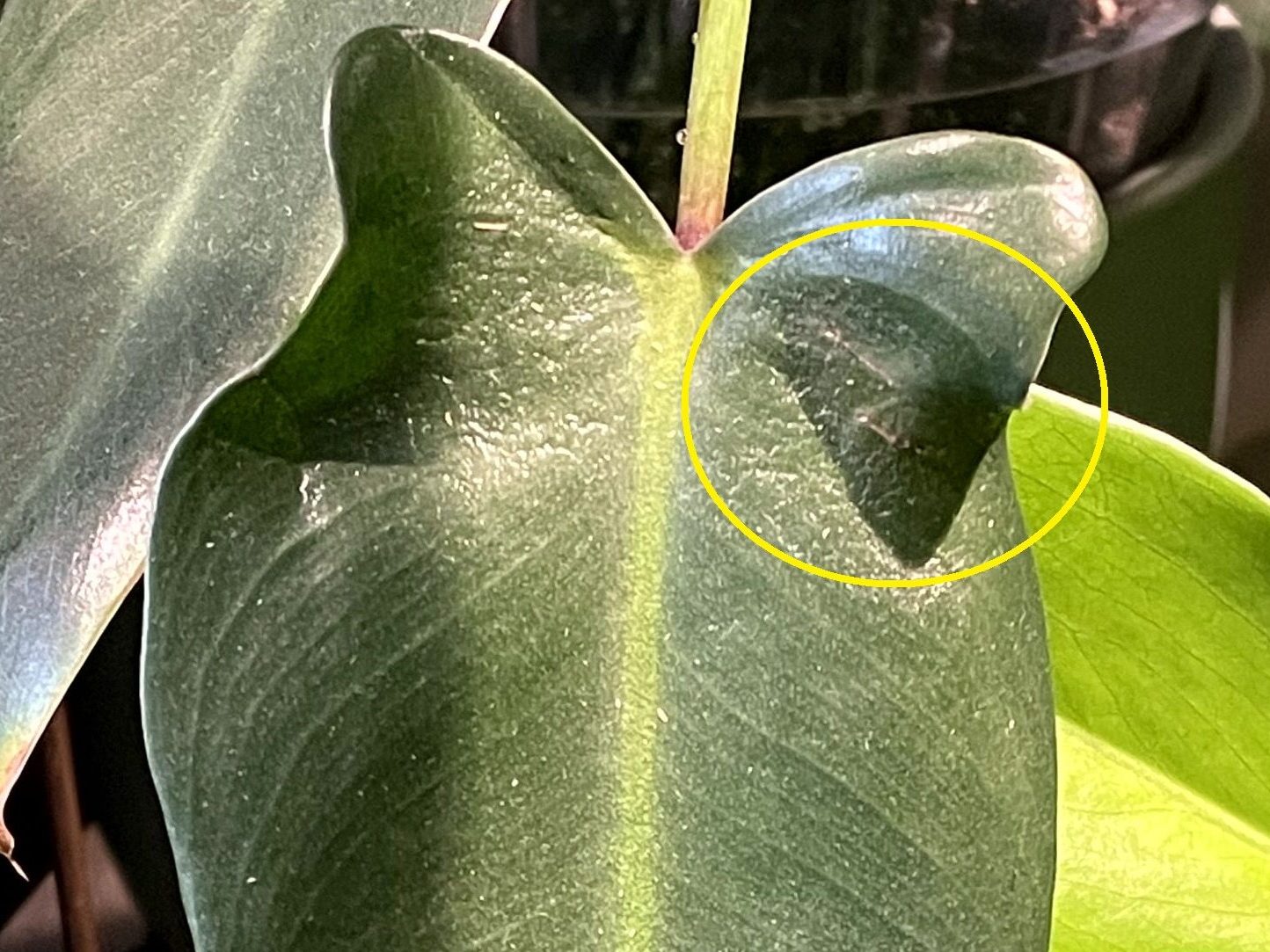
Dimpling and distorted leaves, both on existing and new growth, are often the work of Thrips on foliage plants.
While other pests can distort leaves, these pests are typically more visible.
In the photo below, you can see the right side of the leaf puckering or kind of folding in on itself when it wasn’t previously.
That is the product of thrips. As is the tiny recessed spots or dots across the rest of the top of the leaf.
Common Culprits: Thrips
Clue #4: Discolored patches
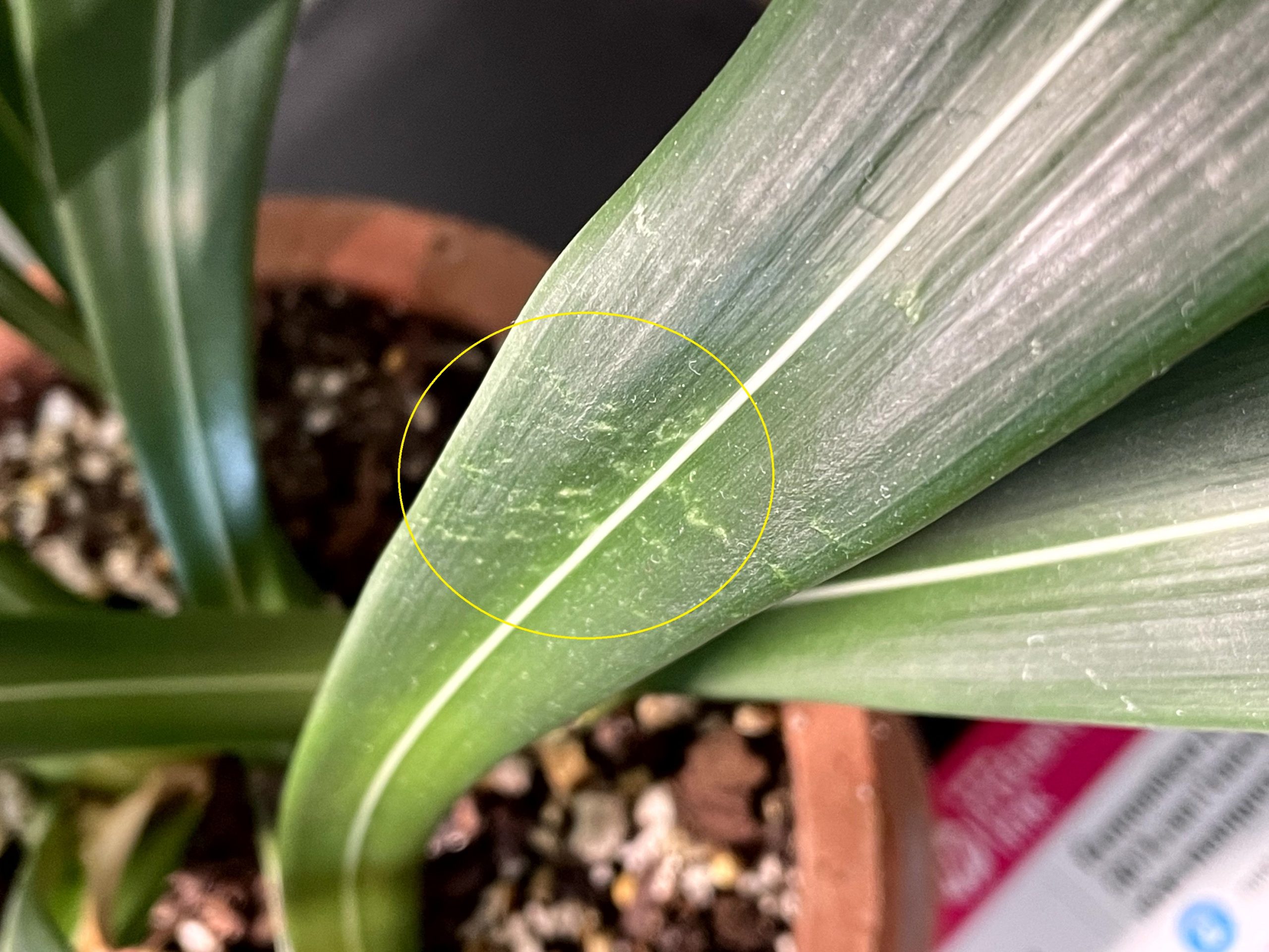
These discolored patches with the yellow scraping marks or silvery hues have one criminal: thrips.
Common Culprits: Thrips
Clue #5: White dots or cottony clusters
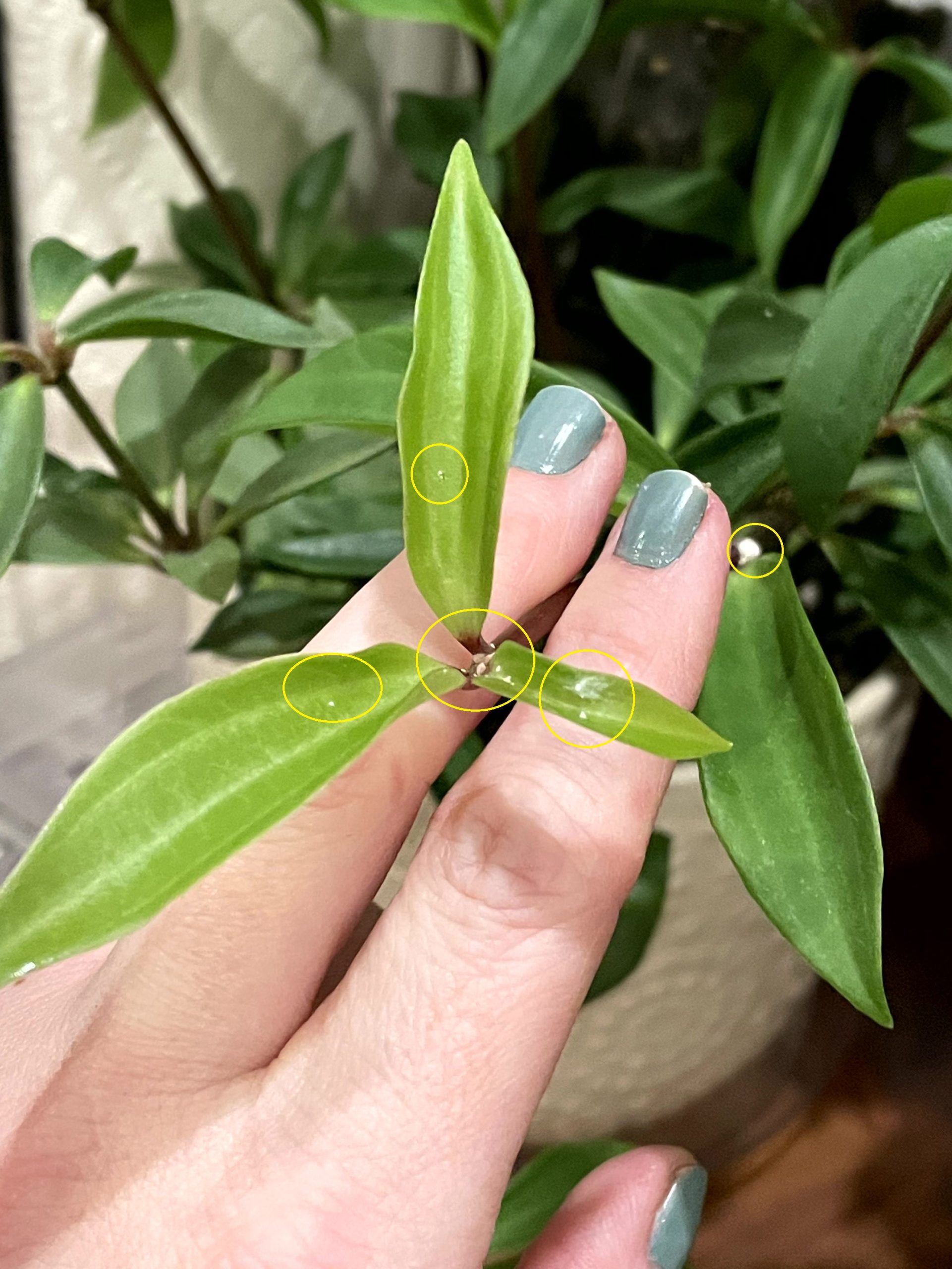
Tiny white cottony dots and larger cottony spots and clusters are the work of mealybugs.
The more mature mealybugs are easier to see, like the one near my pointer finger. But the teeny tiny white specks on the leaves between my fingers, those are the juveniles.
Mealybugs love new growth (as do many pests), so be sure to look there for more.
Common Culprits: Mealybugs
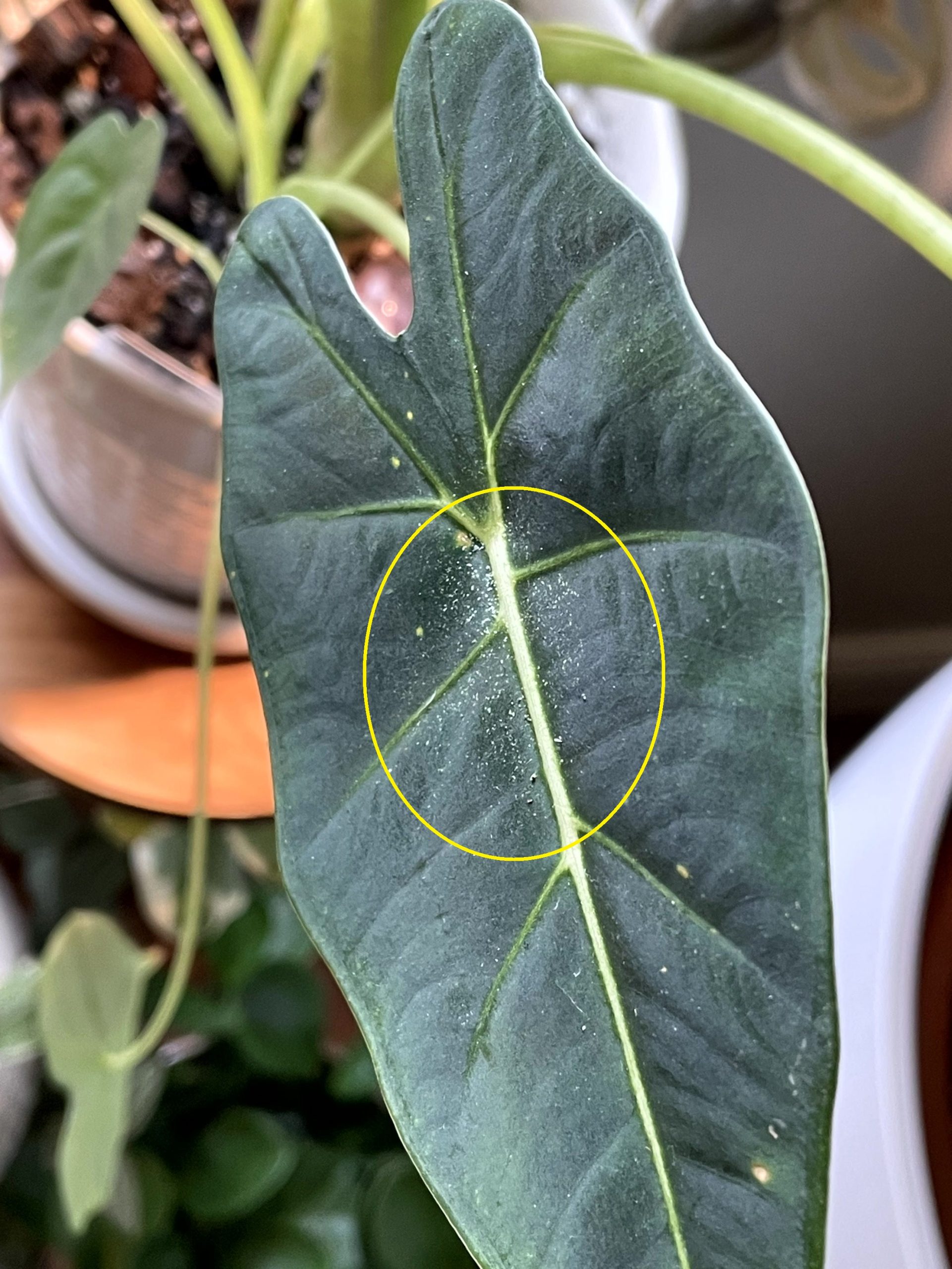
Clue #6: White or Red Dust
White or red dust on leaves are the telltale tale signs of spider mites.
Particularly watch for this on Alocasias, Colocasias, Hibiscus, and Citrus.
Common Culprits: Spider mites
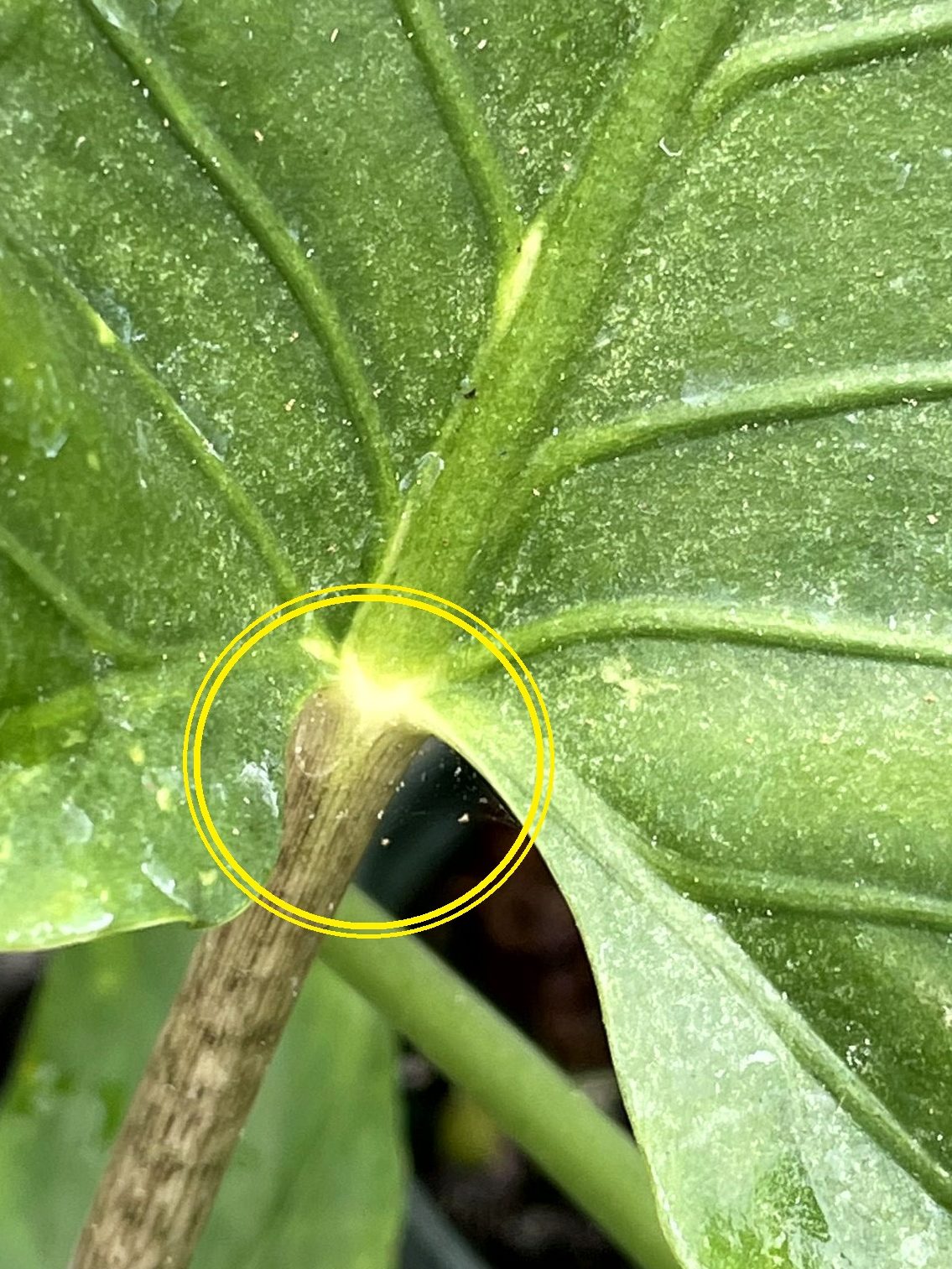
Clue #7: Webbing
Here you can see some webbing between the leaf petiole and the leaf itself.
On that webbing are little white flecks. Those white flecks are spider mites and the webs they produce.
When infestations become large, webbing becomes obvious, as it is here.
Note the tiny yellow dots across the leaf as well, another telltale spider mite sign.
Common Culprits: Spider mites
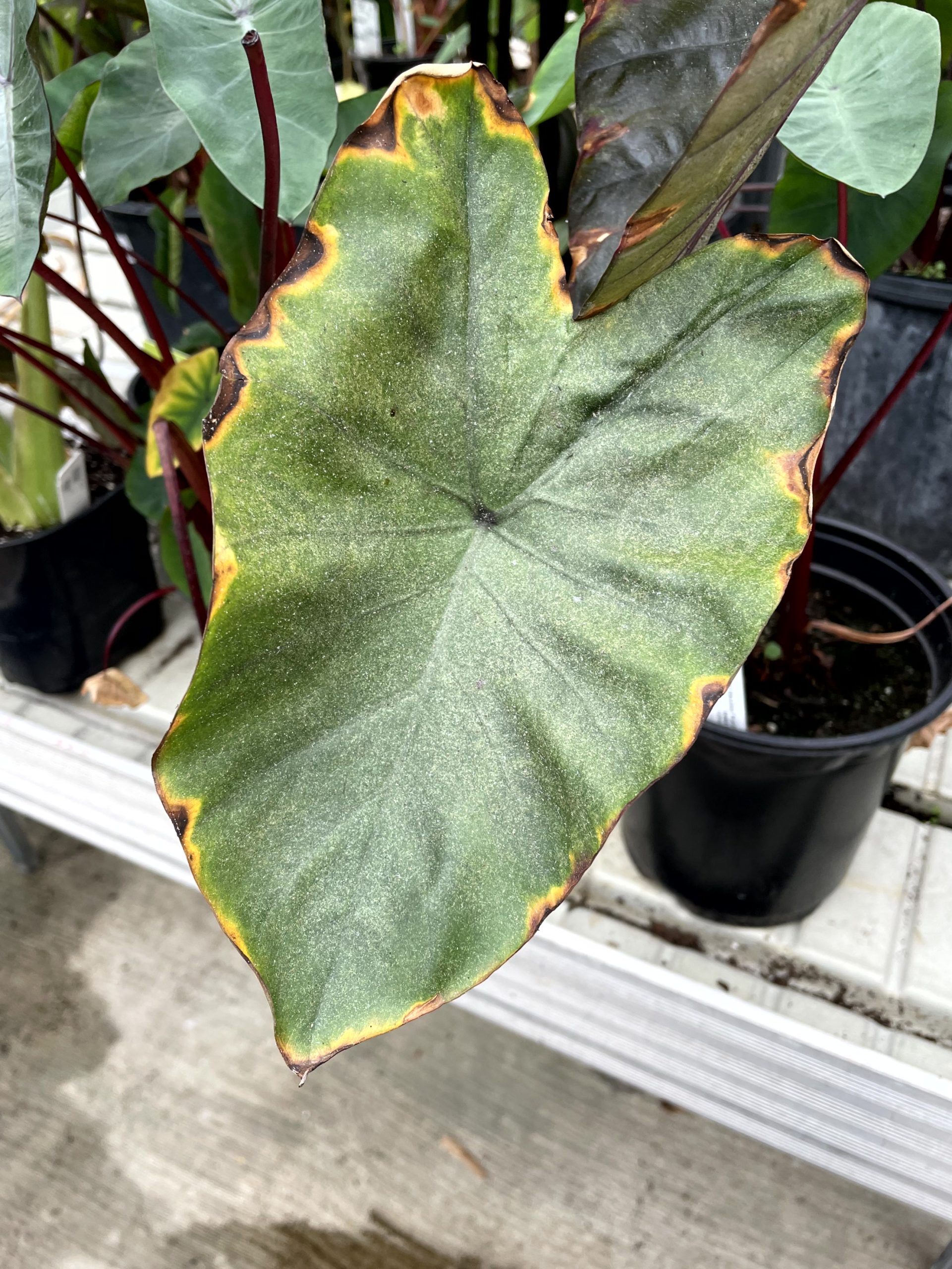
Clue #8: Dull, Faded Leaves
These keaves are normally a rich green, but now appear to be a very faded mint green.
This is the product of thrips, often referred to as silvering of the leaves.
Also note all of the tiny dots covering the leaves, which is the product of spider mites. Same with the leaf edges yellowing and crisping, due to mite damage.
This poor colocasia is battling both thrips and spider mites, but it was the one example I could find of silvering for thrips which I wanted to show you.
Common Culprits: Thrips & Spider Mites
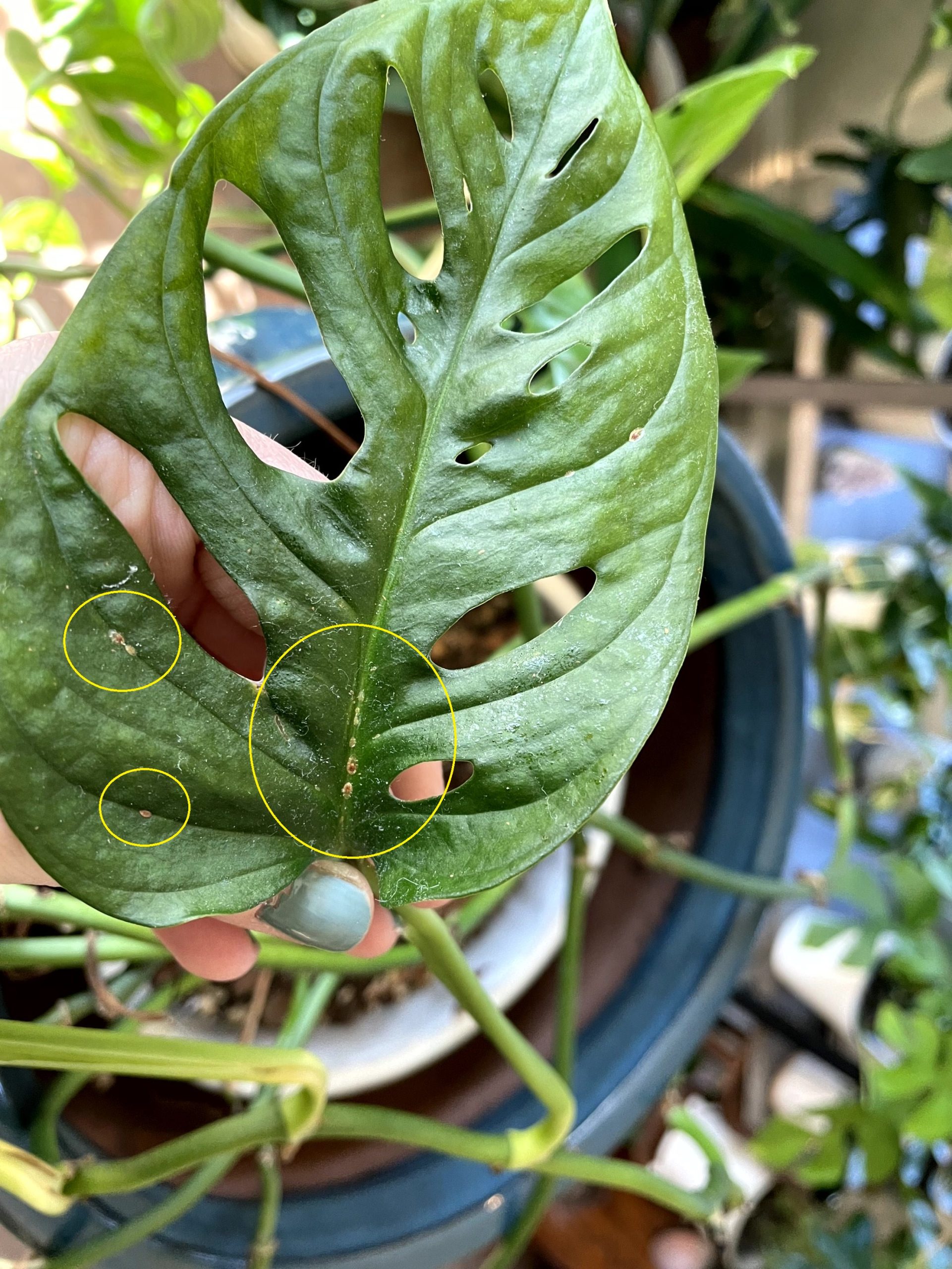
Clue #9: Discolored bumps that you can pick off
The little tiny bumps on the leaves, along the veins, are scale.
Scale can appear more lumpy and bumpy, but they do often look more diminutive like they appear here.
To give you an idea of size, these Monstera adansonii leaves are larger than my hands.
Common Culprits: Scale
Clue #10: Rice-like flecks on leaves
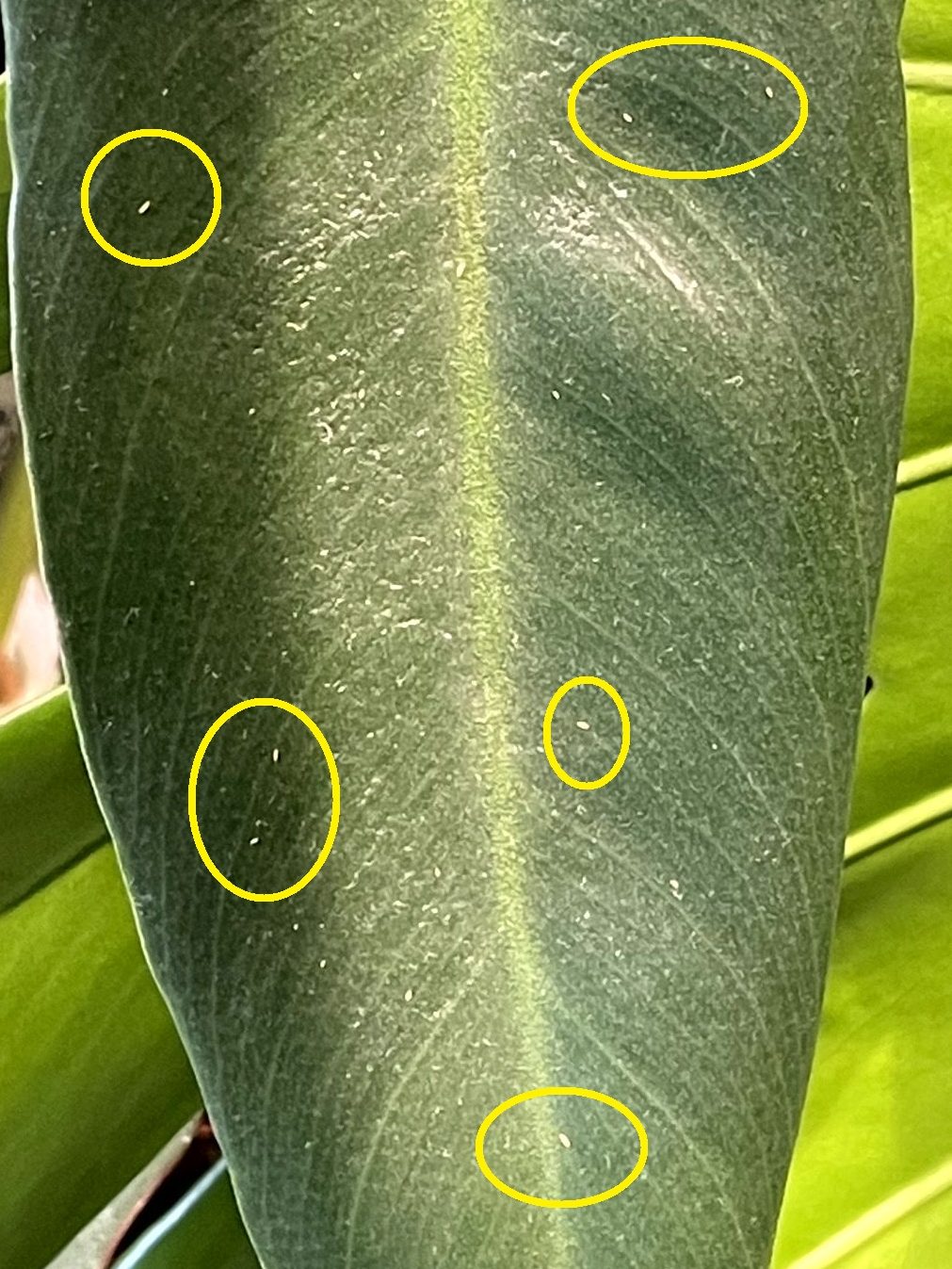
These tiny, rice-like flecks are juvenile thrips.
Mature thrips will be slightly larger and black in appearance.
I only circled some of the thrips on the leaves to make them easier to spot.
Once you get the hang of looking for them (which probably means you have them in your home often, like me), they become much more obvious despite being tiny.
Common Culprits: Thrips
Clue #11 Tiny black balls on leaves
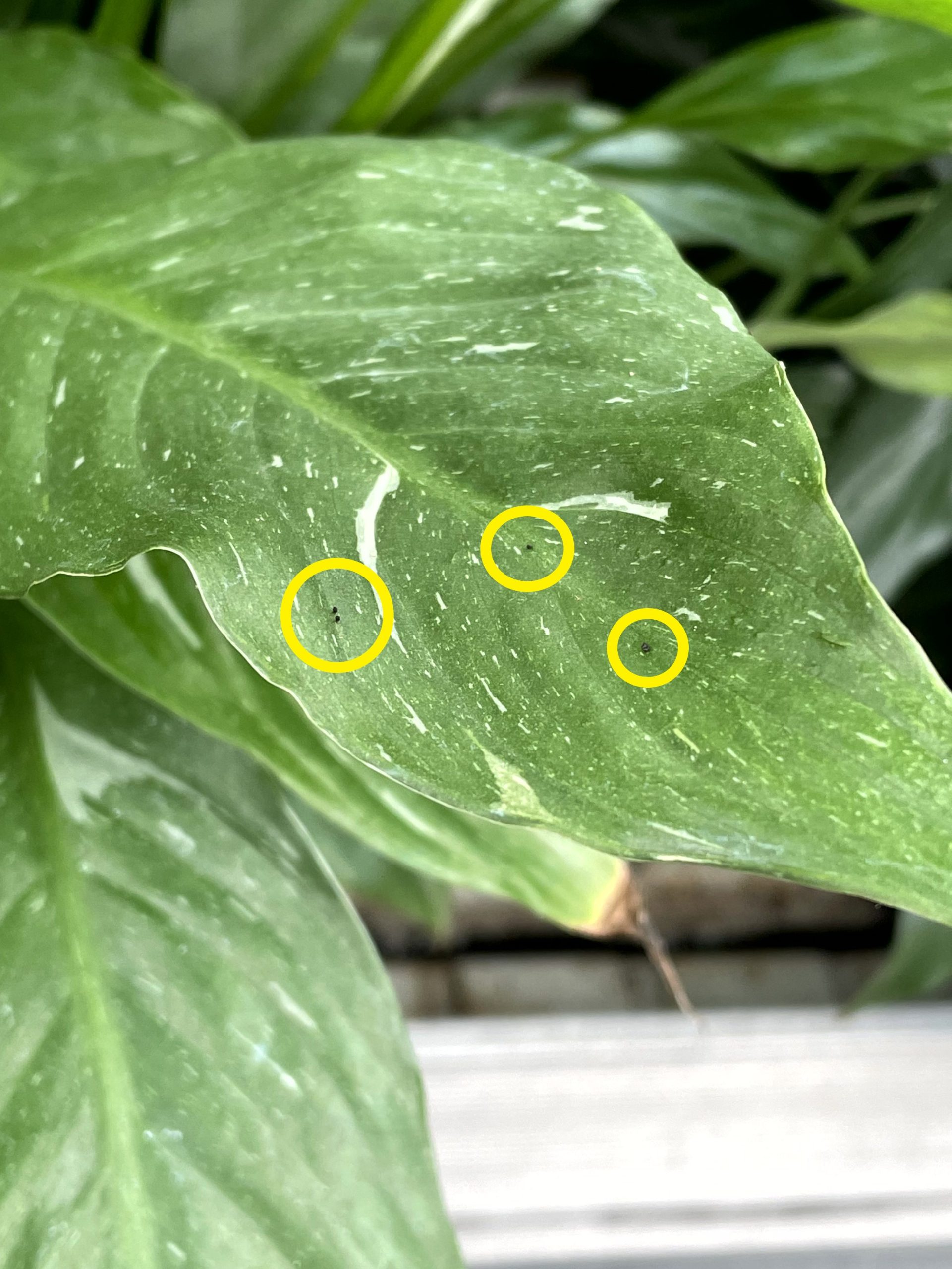
Tiny black balls on leaves are most often fecal matter (poop) left behind from thrips.
If you see the poop, but not the thrips, look at the bottom of the leaves above the poop.
Common Culprits: Thrips
Disclaimer
*This post is not meant to be all-inclusive. It covers what, in my experience, is the most common pests and the most common experiences.
If you are looking for more information, please check out the post linked here, which covers more pests with photos and symptoms:
What Pest is on My Houseplant & What Can I Do About It?
If you do something different that works better for you, share it in the comments below!
That’s how we learn and grow as a community.
Related Posts
Exposing My Simple Pest Management System I Wish I Started Years Ago!
Flat Mites: How to Identify and Treat Flat Mites for Hoya Growers
0 Comments