


If you’ve ever been confused about dry rot and want more information about how to identify it and what to do about it, this post is for you!
What is dry rot?
Houseplant hobbyists use dry rot to describe when houseplant roots rot due to infrequent or irregular watering.
To learn more about how lack of water results in rotten roots, continue to the next section.
I think dry rot is used to distinguish its symptoms from root rot (or as I might like to call it “too wet or too dark rot”).
Both root rot and dry rot results in rotten roots, but the reason the roots are rotting is different.
And because of this, the way we need to treat the plant and adjust our care moving forward is also very different.
“Root rot” most often refers to a houseplant sitting in wet conditions for long periods, which causes the roots to rot.
If you want to understand more, click here to read a post regarding root rot.
I will attempt to keep myself focused on dry rot in this post. 🙂
Why does dry rot happen?

Dry rot happens in two phases:
First, the plant doesn’t receive enough water to keep its roots well-hydrated.
- This causes the ends of those roots to begin dying and drying up.
- The dried-up roots can no longer absorb water to hydrate the plant, causing significant harm.
Then, the plant is watered again, either because the owner believes it is time to water or because the plant is starting to look shriveled and thirsty due to its roots not functioning correctly.
- When water is added, the roots cannot use it, so the water just sits around the dying and dead roots.
- This environment (water & dead roots) invites nature’s cleanup crew to move in and break down the roots.
Once the owner realizes something is very wrong with the plant and pulls the plant out of the pot, they see that the roots are rotting.
However, the roots are not rotting due to “overwatering” but rather a lack of water or inconsistent watering.
How can you prevent dry rot?
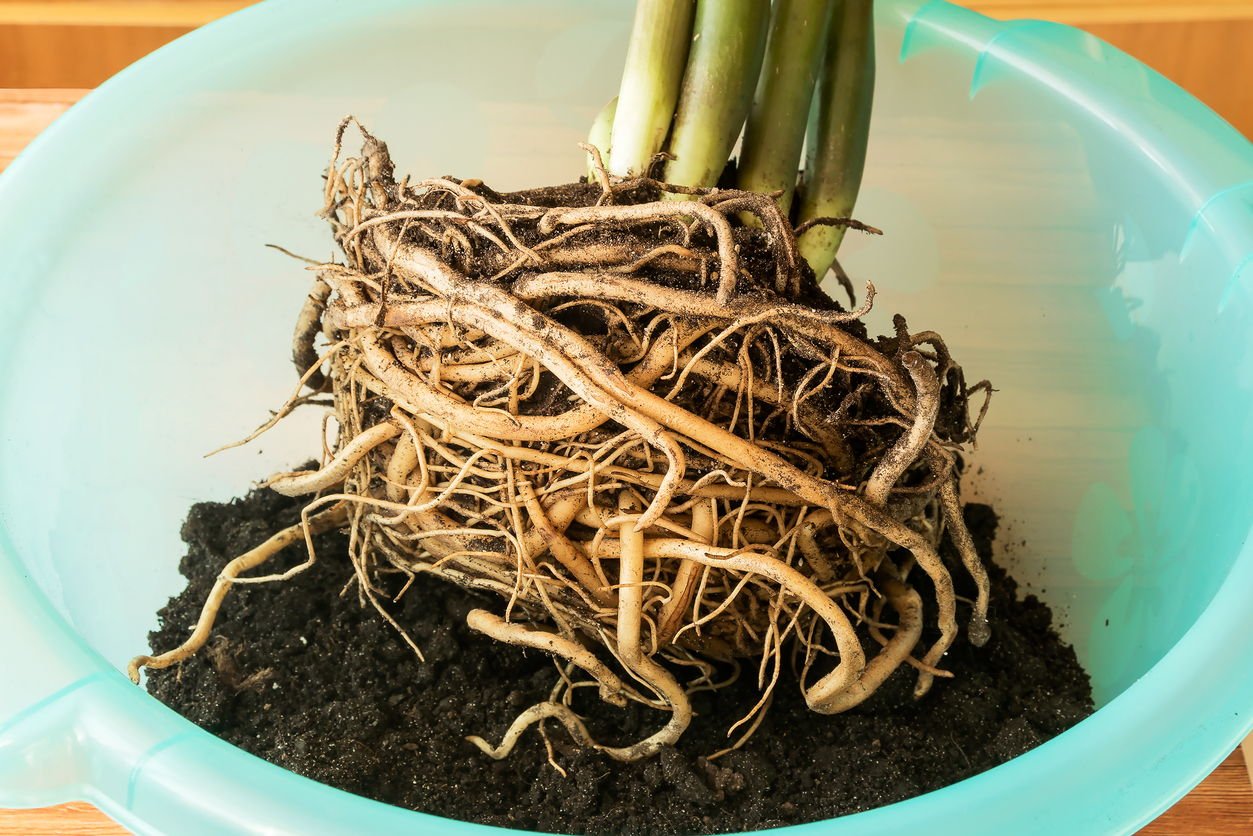
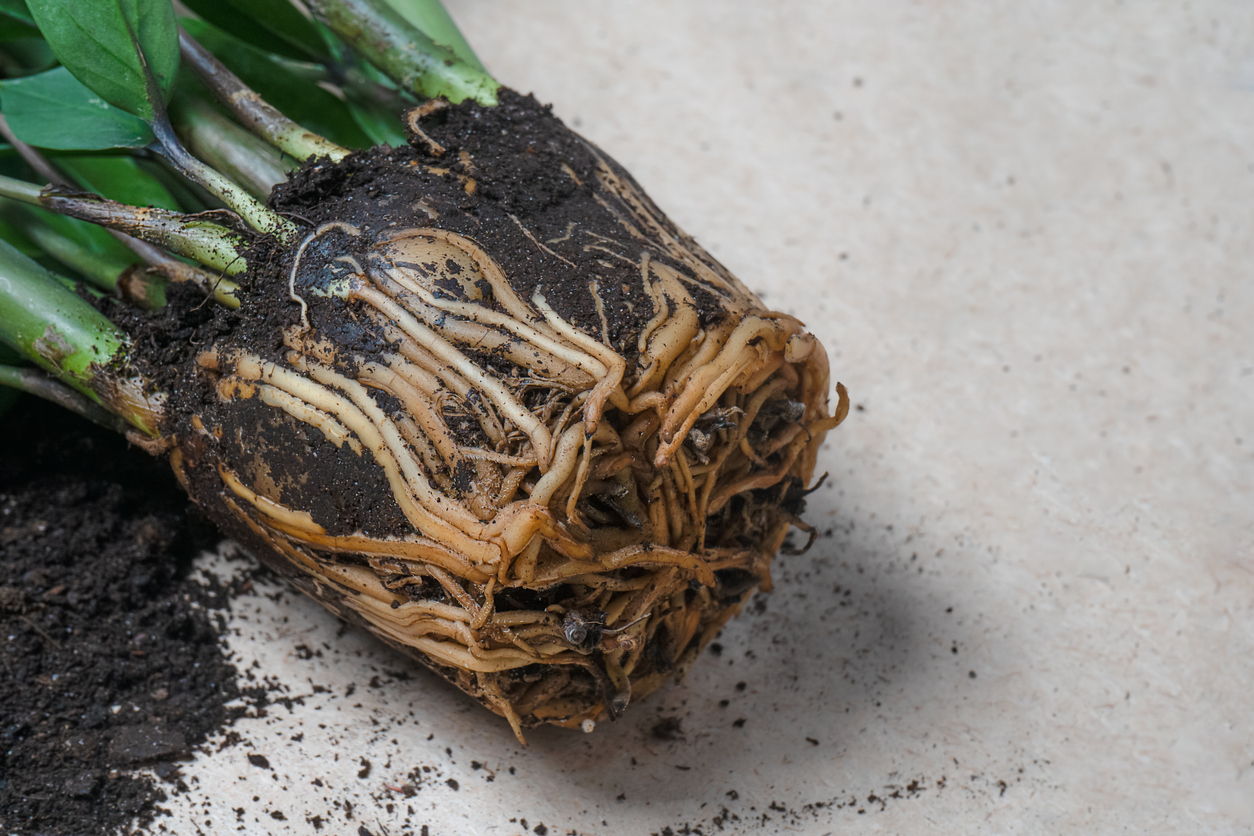
To prevent dry rot:
- Check a plant regularly to see if it needs to be watered. At least once a week, perhaps more often for delicate plants like ferns.
- When you water your plant, do so thoroughly. Give the plant enough water that water drains out of the drainage holes and into the saucer, then remove excess water to prevent root rot.
- Repot plants that are drying out very quickly into larger pots so they do not sit dry for long periods
- If you are traveling and cannot water your plants for an extended time, move them to a dimly lit area of your home so that they require little water while you are gone.
What can you do when your plant has dry rot?
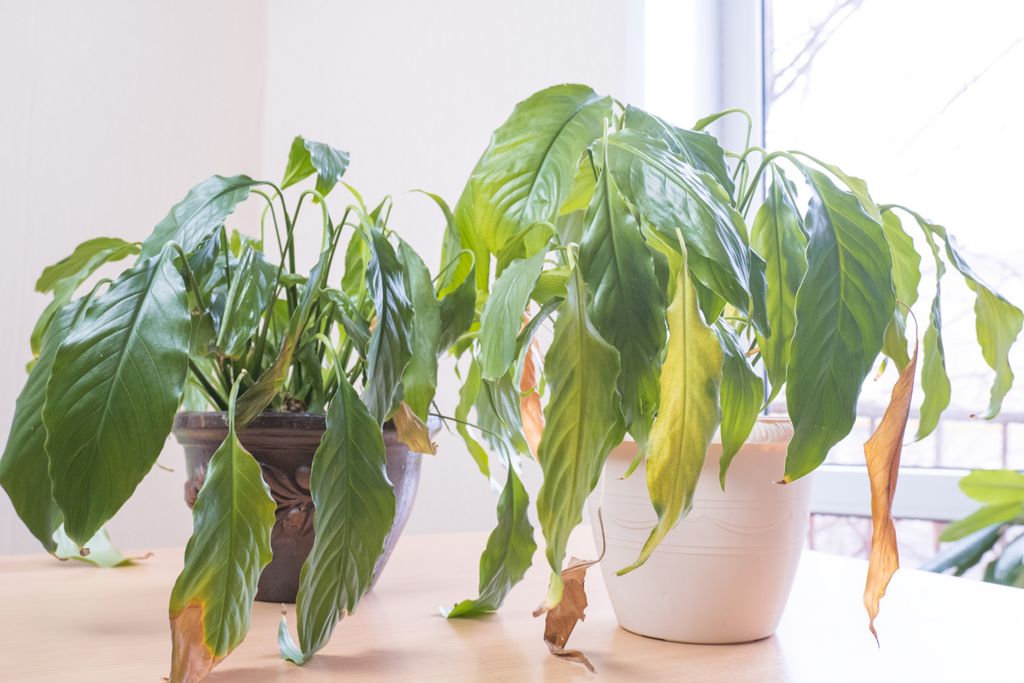
If you believe your plant has dry rot because:
A. you know you’ve watered infrequently or inconsistently OR
B. because you check the roots and they are rotting, but the rotten roots are falling apart, not slimy and losing their outer sheath….
There are two options:
Option #1: Propagate a piece of the plant to grow a new plant
This method will vary widely depending on what type of plant it is.
Check out the section on my website labeled Propagation for tips and tricks.
Option #2: Save the existing plant
If you’d like to save the existing plant:
Then, I recommend removing any roots that are falling off to clean up the root system.
You can do this by gently tugging at the roots; anything that isn’t alive will pull away easily.
After this, repot into a new potting mix and a clean pot.
It could be the same pot, but for best results, I recommend washing it with soap and water.
Once the plant is repotted, I would water it regularly but NOT thoroughly.
Usually, I add enough water to a plant so that the water drains through the pot and out of the drainage holes to ensure a thorough watering.
However, when a plant is recovering from dry rot, it cannot take up this amount of water.
I want to add just enough water so that the plant detects moisture in the soil and musters up the energy to start growing new roots.
So, I add just a little water. Maybe one-fourth of the amount of water I would normally.
Then I’ll check the plant really often—every other day or so — to see if it’s dry. It’s going to need a lot of consistent care to recover.
I think of the plant as being in the ICU after a medical incident, and I’m the nurse checking on it regularly to ensure it’s okay.
To check for root growth, I gently tug on the stem at the base of the soil occasionally.
The more resistance the plant shows to my tugging, the more roots have amassed.
If the plant was dehydrated and shriveled when I tried to rescue it, I could also tell it had started to grow roots when the leaves started to plump up and look hydrated again.
It’s a long road to recovery, but it’s very fulfilling to watch and experience the process of bringing a plant back from nearly dying.
Disclaimer
This advice may not work for every houseplant grower, but it works for me and my plants!
If you do something different that works better for you, share it in the comments below!
That’s how we learn and grow as a community.
Related Posts
A Simple Guide to Root Rot: How to Identify, Control, and Prevent It.
How to Identify and Control Root Mealybugs
Exposing My Simple Pest Management System I Wish I Started Years Ago!
0 Comments