
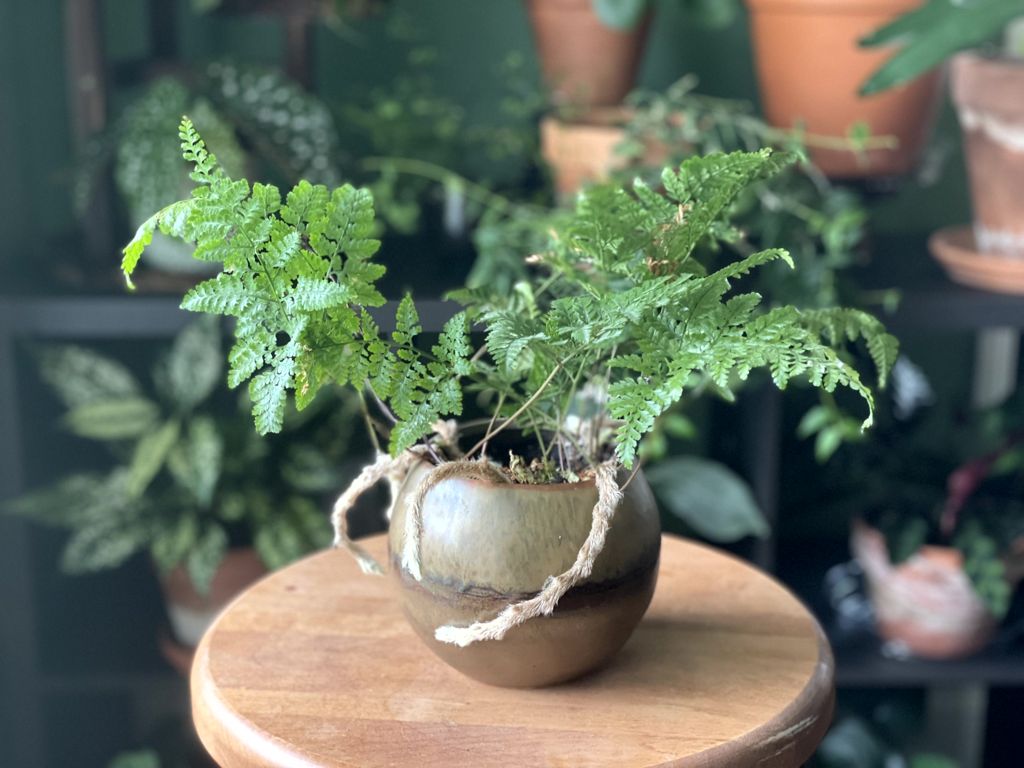

Your plant doesn’t live in your house. It lives in your system, and you are a part of it! Let me explain…
When we first start growing houseplants and get excited about the hobby, many of us want to learn everything we can about them!
This often starts with researching aspects of houseplant care and noticing that the information is divided into several core categories. For example, you will find how to provide a houseplant with the light it needs, how to water it, what kind of potting mix/soil it requires, how to repot it, how to fertilize, etc.
These categories make the information less overwhelming for beginners to learn, but they are presented as independent subjects, much like how math, science, writing, and reading are in grade school when we are young.
But as we progress through schooling, the skills we learn in each subject area begin to support the others. For example, using math becomes critical to understanding science and performing experiments.
This same phenomenon applies to houseplants and all aspects of their care. What first seems like its own subject area (light, watering, soil, etc) is really all part of an interconnected system.
A system is a set of interacting elements forming a whole (abbreviated definition from Merriam Webster, linked to the dictionary website).
The whole, in this case, is the plant.
I’ve spent a lot of time thinking about how best to describe it, and so far, my most successful idea is to use a balance (photo below).

A balance operates by placing enough of something on one side to equal out the amount of something on the other side. To balance it out. If you remove a little from one side, the other side also needs to be adjusted.
The same thing applies in houseplant care. If you place your plant in a spot where it is now receiving a little more light than before, it will be able to use water more quickly. Therefore, it will need to be watered more regularly, will likely grow faster, will probably need to be repotted sooner, and will also need more fertilizer to support it.
If that same plant, in its same spot, is now getting a lot more humidity because it’s spring and the windows are open and it’s been raining a lot… the humidity will allow the moisture in the potting mix and around the plant to linger longer, so the plant may not need to be watered as often.
Then, Spring progresses, and that little plant is on its next journey. A month or so into Spring, the tree outside the window starts to leaf out, and the houseplant now gets far less light. The tree is shading the houseplant out. The humidity is higher, and the light level has gone down. The plant hasn’t moved, but the conditions have still changed. Watering needs to be adjusted again.
Despite all of these changes, the warmer conditions still have the plant growing exponentially. So much so that the plant’s roots are exploding out of the pot, and it is ready for a repot. What kind of potting mix you use and what pot you choose will drastically change what happens next. Because roots don’t just want soil and water, they also want air. And the combination of these factors will determine how often the plant needs water.
Using a bagged houseplant mix is completely fine, but (unless it’s a fancy, expensive mix) it will have less aeration than if you add a bunch of ingredients (like pumice or perlite) to improve drainage and air around the roots.
Similarly, ceramic and plastic pots help retain moisture, whereas unglazed clay allows moisture to seep through, which will dry the pot faster.
The size of the container relative to the size of the roots will make a big difference, too. A whale of a root in a tiny pond of a pot will drink up the water so fast, but a tiny baby goldfish rootball in an ocean of a pot could easily drown before ever drinking it up.
That doesn’t always mean that more aeration is good. It depends on the plant and what it wants. A fern that wants to stay moist or even wet doesn’t want a bunch of aeration. But a desert cactus that was built for the heat, the sun, and the sand… well, give it all the air you can.
As you are beginning to see, if you hadn’t before, every aspect in and around the plant affects every other. We think a lot about the aspects that we control the most and most regularly (mainly watering), but we can also tune in to a whole lot more in order to meet our plant and care for it on a whole new level.
This was a very experimental and difficult post for me to write, so if you have any questions or need any clarification, please let me know! Thanks so much for making it to the end.
Happy growing, everyone!
Related Posts
Want a Bushier, Healthier Plant? It’s Time to Get Out the Scissors.
The Lie of Natural Talent and How It Applies to Your “Greenthumb” and Your Entire Life.
Need permission to give up on your houseplant? Let this post be it.
You want to grow houseplants successfully? Embrace the ugly phase.
0 Comments