

If you are excited about houseplants but have pets at home, you might be surprised to learn that many of the most common houseplants are toxic!
Pothos, philodendrons, snake plants, peace lilies, and ficus (like the infamous fiddle leaf fig) are all toxic to our fur babies.
But I also have good news! There are lots of pet-safe plants. Today we will cover a few of my favorite pet-safe plants that are beautiful and rewarding to care for!
I’ll give you all the details: why I like them, how to care for them, and how easy (or hard) they are to care for.
Let’s jump into it.
Disclaimer: When you buy through links on my site, I may earn an affiliate commission at no cost to you. I only recommend products I use and love. All proceeds go back to supporting this blog. Thanks for your support!
#1 The Parallel Peperomia (also known as Peperomia tetragona, formerly Peperomia puteolata, and Peperomia Stilt)


Why I like it: The Parallel Peperomia is a petite little plant with striking leaves that feature deeply indented lines running parallel from the leaf tip to where the leaf meets its petiole.
It can be grown upright if kept trimmed often, or grown as a hanging plant when allowed to grow wildly. Both ways make for a beautiful addition to any home.
I’ve been growing mine for years and trimming it back. The cuttings root easily and I’ve shared them with friends and family.
Safe for pets? Yes!
Safe for kids? Yes!
Care difficulty? Pretty Easy!
Where to buy it? Here’s a link to one of my favorite Etsy shops selling Peperomia tetragona at the time of this post’s publishing.
Basic care info:
This peperomia has robust, cardboard-like leaves that allow it to survive drying out completely.
It would prefer not to stay dry for long and not to stay wet for long either.
The ideal circumstance is that its root system is only slightly smaller than the pot that it’s in and it has a well-draining houseplant potting mix.
You could buy a premade mix, like FoxFarm Ocean Forest Potting Soil or Espoma Organics Cactus Mix (linked to Amazon). These have added ingredients for sufficient drainage.
These plants want to be near a window but do not want the sun hitting them all day. Sun on them all day long would likely burn their leaves and cause them to dry out too fast. But some morning sun or afternoon sun would be just fine.
I grow mine to the side of a Southern window where it gets some afternoon sun and bright light the rest of the day.
I let mine dry out completely or nearly completely and then water it thoroughly until water runs out of the drainage holes.
I try not to allow it to dry for long because I do not think it really enjoys periods of drought like a cactus. It can survive drought, but it isn’t equipped to handle drought regularly.
Any houseplant fertilizer applied according to the recommended dose would work fine. You could also cut it in half to be extra safe and avoid burn.
#2 Hoya shepherdii or the String Bean Hoya


Why I like it:
Hoya shepherdii is very structural, particularly once it has been wound around a trellis a few times. It makes such a beautiful statement piece, with its long elegant leaves.
When it blooms, it is even more spectacular!
Safe for pets? Yes!
Safe for kids? Yes!
Care difficulty? Easy
Basic care info:
Hoya shepherdii’s care is very similar to Peperomia tetragona. It likes to receive bright light but not direct sun all day. I grow this hoya (with almost all of my hoya) in a west-facing window where they receive some sun in the afternoon and bright indirect light the entire day.
I will water this plant right when it has dried out or right before it’s dried out and I check just by sticking my finger as deeply as I can into the pot. It’s currently in a 4-inch pot, so it’s not hard for me to gauge the moisture level in most of the pot with my finger.
If you are less comfortable using your finger, you could absolutely use a moisture meter to help. I used to use one a lot. I would water most of my plants when the moisture meter read a 3.
I like to grow my hoyas in terracotta pots with a houseplant potting mix that includes perlite or pumice for added drainage. I feel like they enjoy drying out quickly, but it does mean that I have to check them pretty regularly for watering. If they are drying out and staying dry, they will not grow. They will sit like statues.
Hoyas also enjoy fertilizer, particularly if you want them to bloom. Regular houseplant fertilizer given using the instructions on the bottle will keep a plant vigorous and healthy.
#3 Rabbit’s foot fern, Davallia sp.
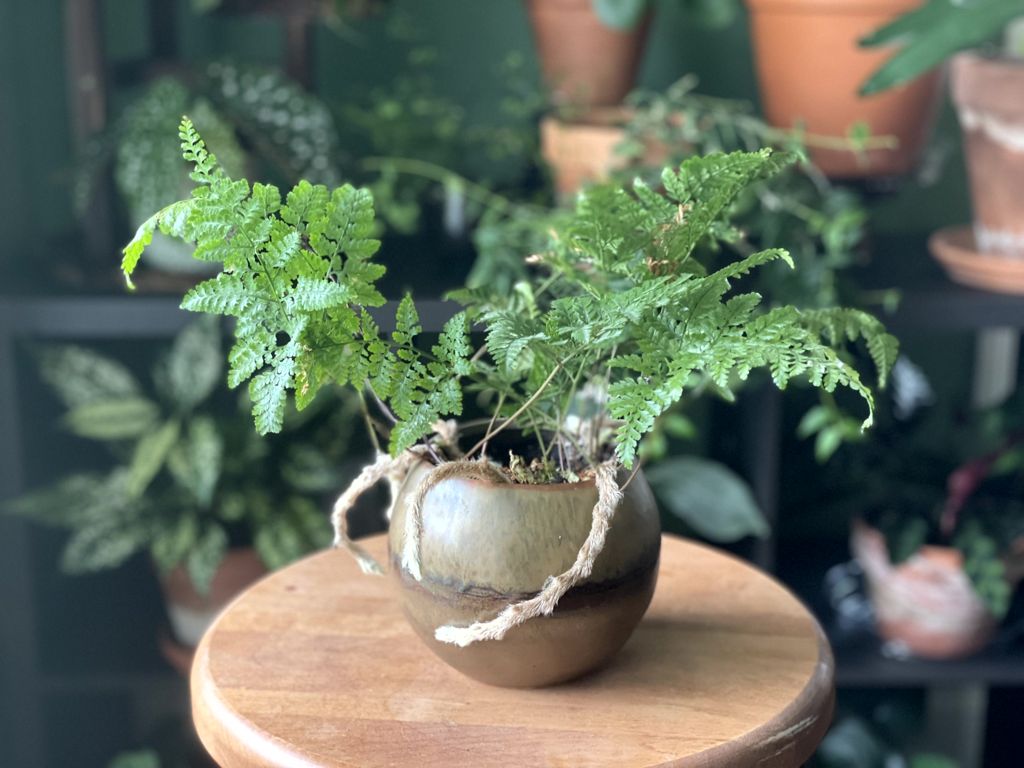
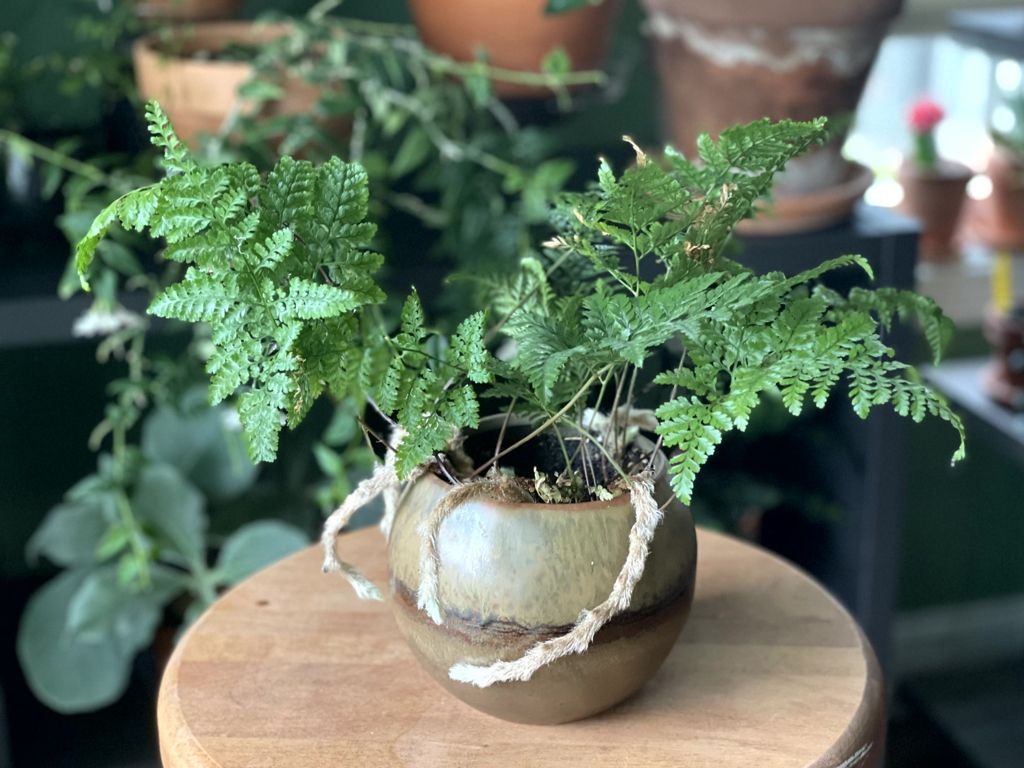
Why I like it: The rabbit’s foot fern is a truly unique and somewhat bizarre plant. It is most well known for its rhizomes which creep on the soil line and out of the pot, loosely resembling a rabbit foot.
To be honest, I don’t really think it looks like a rabbit foot, but I do think it’s a truly unique look. The rhizomes are soft and new growth emerges in a beautiful light green. As the growth matures, it turns a silvery color.
The plant has delicate fronds that are bouncy and more resilient than many ferns. It can survive drying out better than most other ferns. That doesn’t mean it prefers drying out. It certainly doesn’t. But it can survive it.
Safe for pets? Yes!
Safe for kids? Yes!
Care difficulty? Easy for a fern, Moderate overall
Basic care info:
This fern is more resilient than most ferns. Because of those characteristic fuzzy feet, it stores a little more water and can survive a little more neglect. That being said, the fern still doesn’t want to dry out or sit drenched. Here’s what I recommend:
Grow your rabbit’s foot fern right in an East or North-facing window where it will receive bright light and a little bit of morning sun potentially.
Pot it in a ceramic or plastic pot to help retain moisture and use a potting mix that has some added perlite so it’s not too moisture-retentive, but don’t go overboard. This certainly doesn’t need a cactus or succulent mix unless you want to check it daily for watering.
As soon as the surface seems dry, water that baby thoroughly, allowing the water to run out of the drainage holes, and place it back in its happy window seat.
Lightly fertilize using a houseplant-appropriate fertilizer, cutting the strength in half or a quarter. Especially if it’s a chemical fertilizer.
I haven’t had any pest issues with this one, but I would imagine that you could have spider mites, particularly if the plant is stressed.
If the plant is drying out too much, you will see crisping of fronds or dieback. Otherwise, this plant is a really great first fern for anyone looking to add a fern to their home!
#4 Portulacaria afra or Elephant Bush
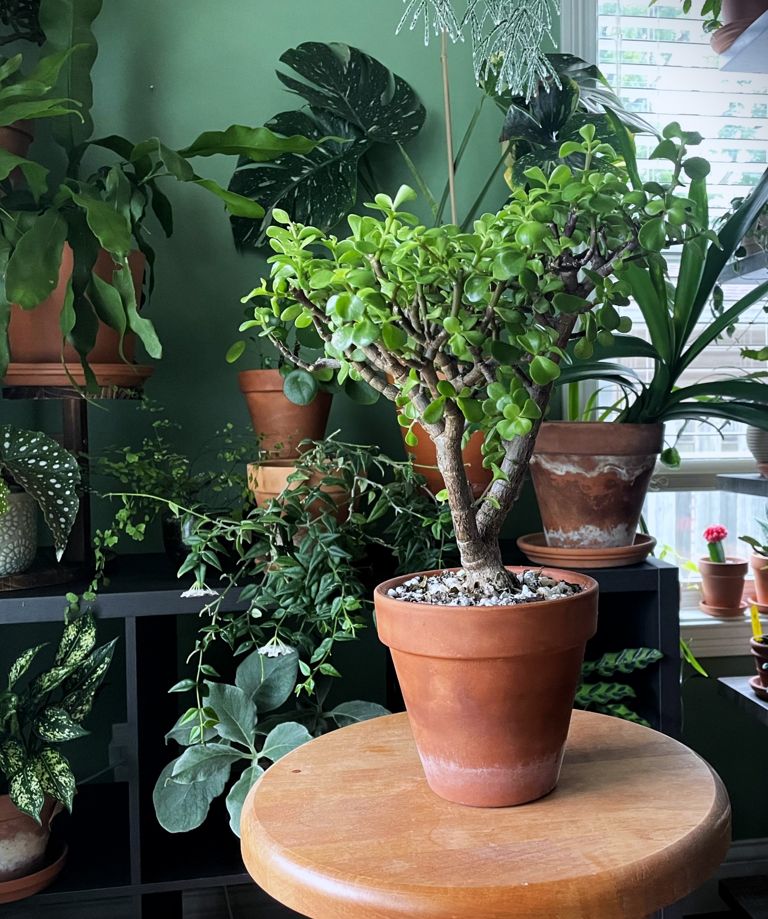
Why I like it: Portulacaria afra is a beautiful little succulent that can be grown as a tree form or a shrub form. I love this plant as a bonsai tree, particularly when it’s an aged specimen.
It’s a great alternative to the more common Jade plant, which is not pet-safe.
This plant is so pet- and people-safe, that it can be eaten. Its leaves are used in salads and as a regular food source for grazing animals in some parts of the world.
Safe for pets? Yes!
Safe for kids? Yes!
Care difficulty? Pretty easy, particularly for a succulent
Basic care info:
Give this plant as much light as you have available. It can survive on most windowsills, but it will be happiest in the sunniest of windowsills. It grows naturally in the harsh, unfiltered sun of Africa and survives drought. It also survives people, elephants, and other wildlife eating it as they visit.
Portulacaria afra wants to dry out completely before being watered again. It does not want to stay wet for long and it doesn’t want to be in a super water-retentive potting mix. This is the only plant on this list that would like a lot more perlite or pumice in it’s mix.
You could buy a houseplant potting mix and do 50% houseplant potting mix and 50% perlite or pumice. You could buy a specialized succulent or bonsai mix and use that. But if you want this plant to thrive, you want something that is going to give it the aerated soil it needs.
You can grow the plant in any kind of container, as long as:
- it has a nice airy potting mix
- is in a pot that is only slightly larger than its rootball
- is allowed to fully dry out between waterings
- and is getting lots of good, bright light
If your plant starts to drop leaves, don’t worry too much unless they are mushy. If the leaves are mushy and yellow, that could be because the plant is either: not receiving enough light, is potted in too big of a pot, doesn’t have a well-draining mix, or is getting watered before being fully dry. You would need to troubleshoot which of these seems right for you.
If none of these apply, you could check and see if your plant has a pest (which doesn’t seem to be a huge issue with these guys – but it is worth checking for mealybugs and scale) or it might just be drying out for too long between waterings.
It’s not too big of a concern though. They truly can survive drought. So, up the watering frequency and they will absolutely bounce back. I’ve neglected my plants many times and had them come back even more beautiful than before from particularly pathetic-looking states.
#5 Black Pagoda Lipstick Plant or Aeschynanthus longicaulis (formerly A. marmoratus)
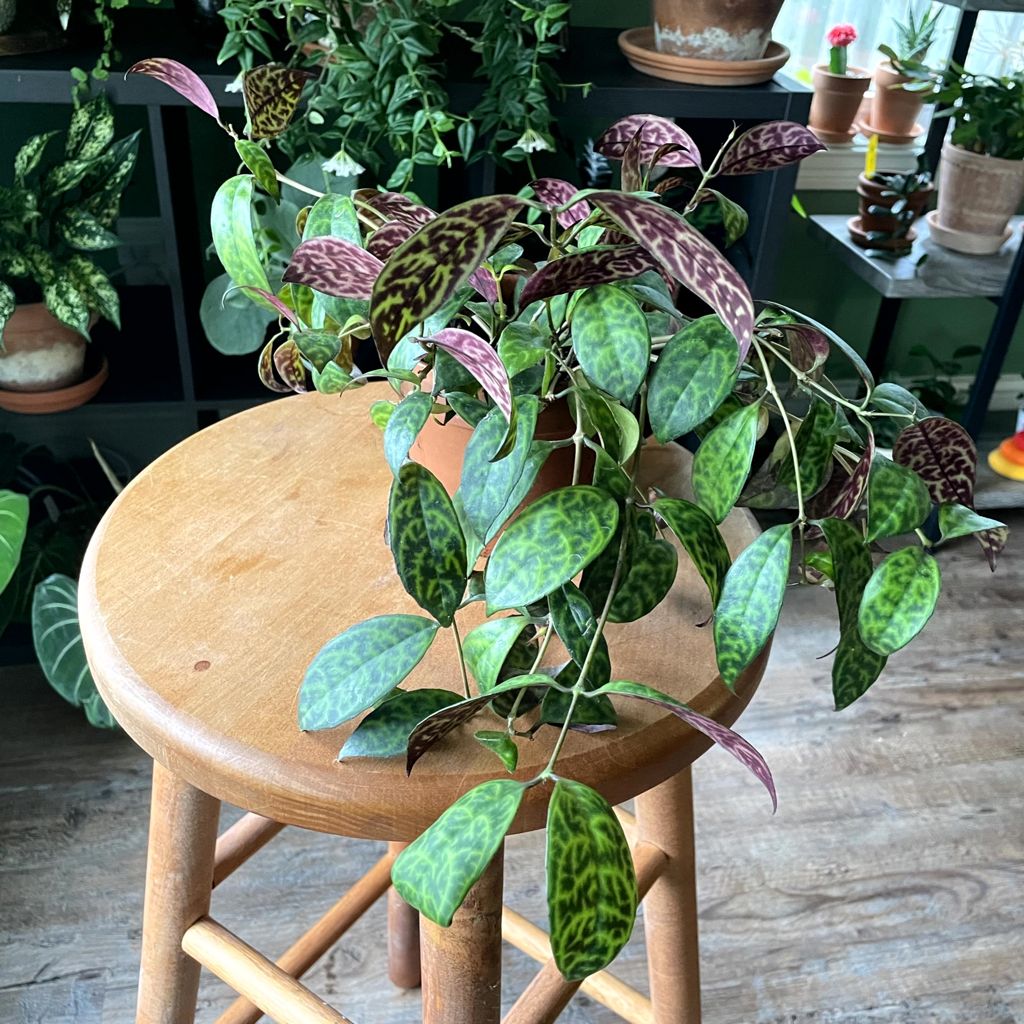
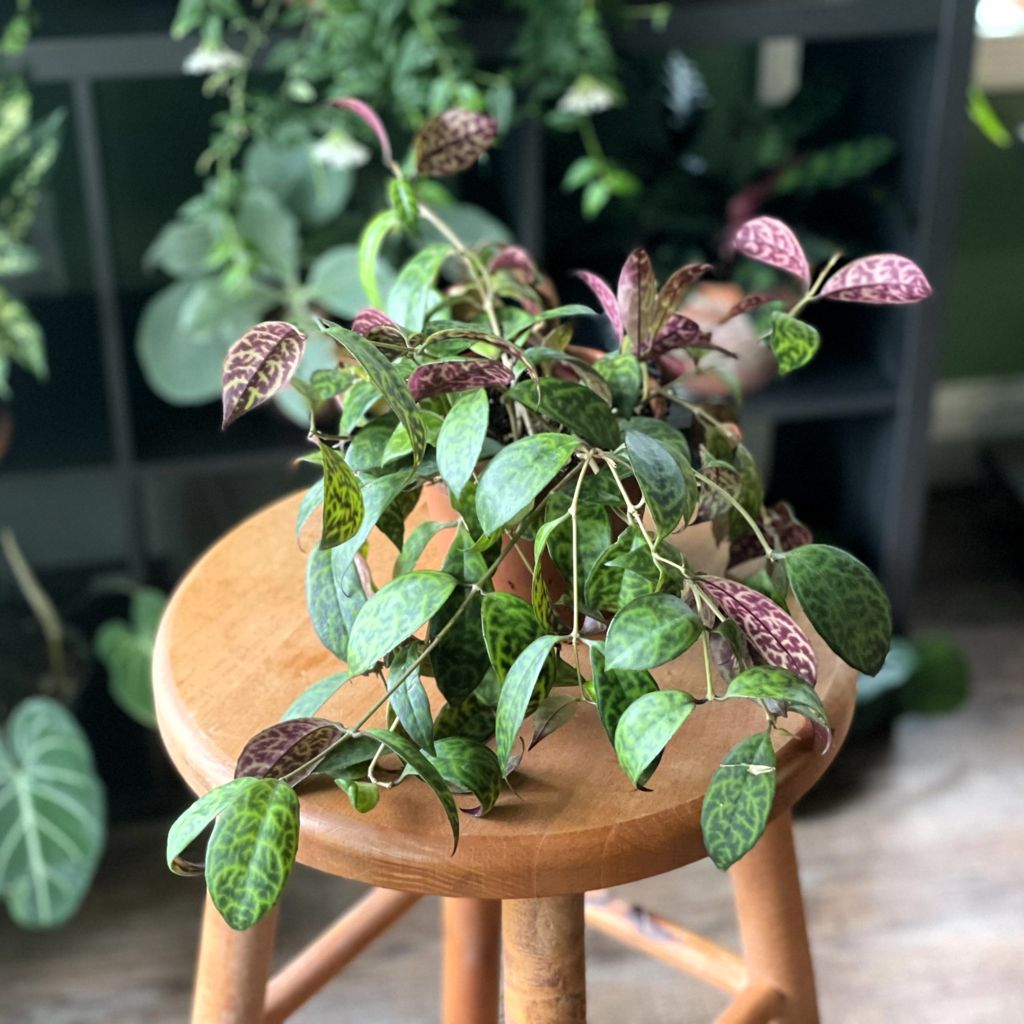
Why I like it: Look at the really amazing patterns on those leaves! That and the purple leaf backs that develop with sufficient light make this plant such a unique and stunning addition to any home. Pictures of this plant often include flowers in shades of orange and yellow, but my experience with growing it and hearing others talking about growing it is that most plants actually produce green or brown flowers that blend right in with the foliage. That’s completely fine, with me anyway, because the foliage more than makes up for it.
Safe for pets? Yes!
Safe for kids? Yes!
Care difficulty? Fairly easy
Basic care info:
Lipstick plants are pretty low-maintenance plants that require light and regular watering, but they aren’t super fussy. However, I will say that if I compare them to hoyas – hoyas are more tolerant of neglect than lipstick plants. Hoyas don’t want to sit dry for long periods, but they can often survive it. Lipstick plants aren’t as forgiving and are much more likely to start showing signs of dehydration or dry rot.
Lipstick plants really need to be watered when they are approaching dryness or right as they dry out to maintain optimal health.
This particular lipstick plant can do well in less light. I’ve grown it in an east-facing window that’s blocked by a large black walnut tree and it was happy there. I’ve grown it in a completely open north-facing window and it’s been happy there. And I’ve grown it closer to a southern window where it was getting, by far, more light.
All of these locations worked just fine. The only real difference is that it was producing flowers in the brightest location and hadn’t bloomed in the others. It is currently in my north-facing window and I might see a bloom forming now. It’s hard to tell because the growth is still very small.
#6 Rhipsalis capilliformis or Old Man’s Beard
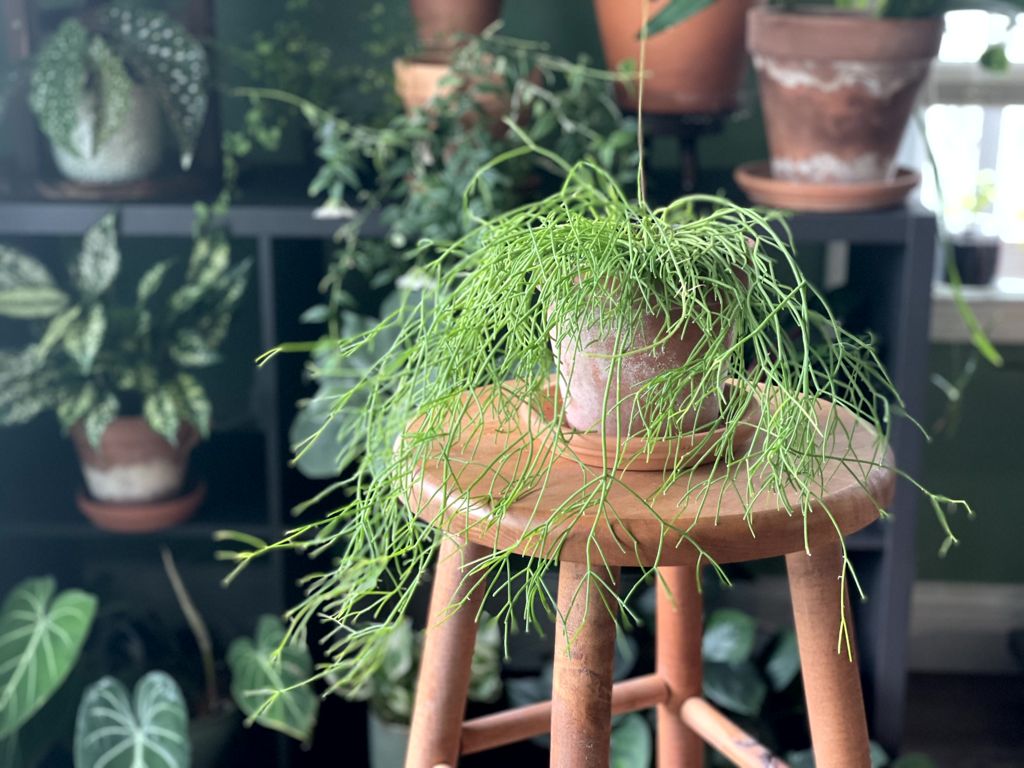
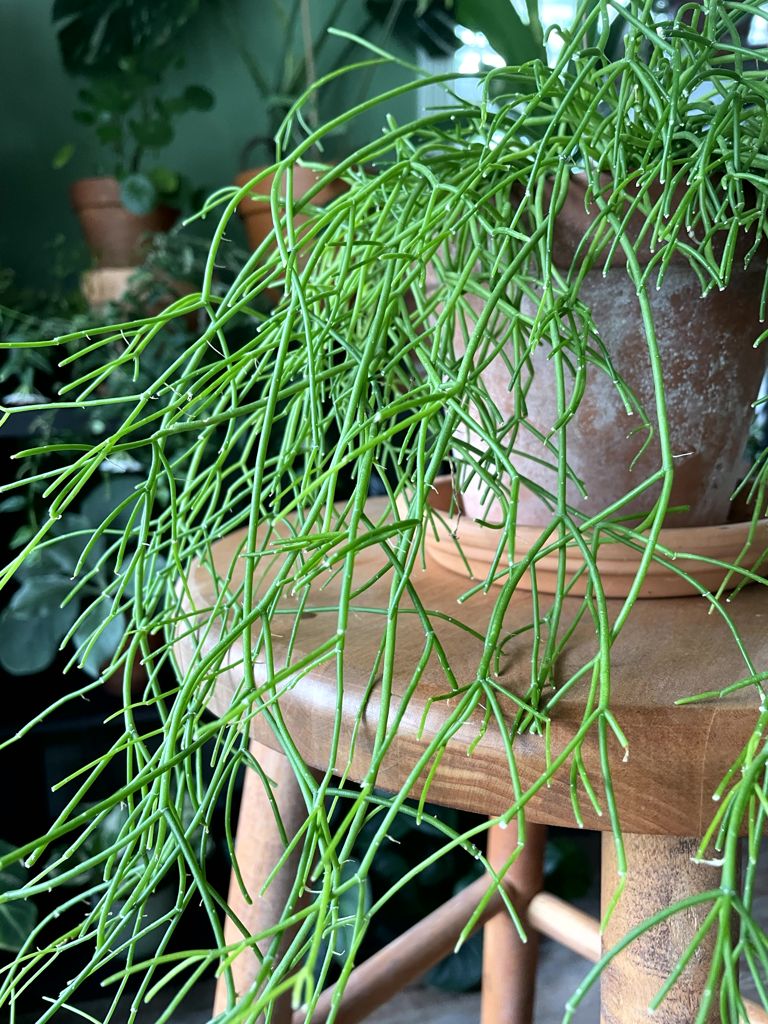
Why I like it: Rhipsalis, in general, are so funky and different from other common houseplants. This one reminds me a bit of a green, grassy wig – in the best way.
It is neat, if you are new to plants like this, to learn that these are true cacti! They are jungle cacti, growing in trees similarly to orchids, hoyas, or many of the common vining aroids.
Because of that, they can tolerate lower light levels than the more commonly thought of desert cacti, and enjoy a lot more water than its desert cousin.
Also opposite its desert cousin, these guys will not stick you with any spines! You get an amazing-looking plant that is low maintenance, pet-safe, and pain-free. It’s a winner in my book!
Safe for pets? Yes!
Safe for kids? Yes!
Care difficulty? Easy!
Where to buy it? For simplicity’s sake, I was trying to find Etsy shops to suggest. However, I couldn’t find a shop that was selling this specific plant that I could vouch for. I did find an independent shop, Kyle’s Plants, that is currently selling this plant and has always sent me very happy and healthy plants. Check his shop out here!
Basic care info:
This rhipsalis, like the hoya and peperomia on this list, wants a lot of good light but does not need direct sun all day. A spot that is in or near a window where it gets some morning or afternoon sun would be great.
Mine hangs to the side of a southern window where it receives direct sun in the morning and bright light, but no direct sun, the rest of the day. It has been very happy with that.
This guy can survive drought, but its stems and roots are smaller and more delicate than some of the other more succulent tropical cacti.
Because of that, it doesn’t store a whole lot of water and would prefer to be watered regularly right when it dries out or right before it dries out.
You can technically grow it in any type of pot, but if you choose a pot (like terracotta) that is porous and wicks water away from the potting mix, you will need to water more frequently. My plant pictured above looks like it is potted in terracotta, but it is actually living in a plastic pot that I placed inside a terracotta pot because I didn’t want the plant to dry so rapidly.
This allowed me to use a well-draining potting mix to keep the roots healthy, but not worry so much about them staying dry for long periods.
#7 Calathea lancifolia / Rattlesnake Calathea / Goeppertia insignis
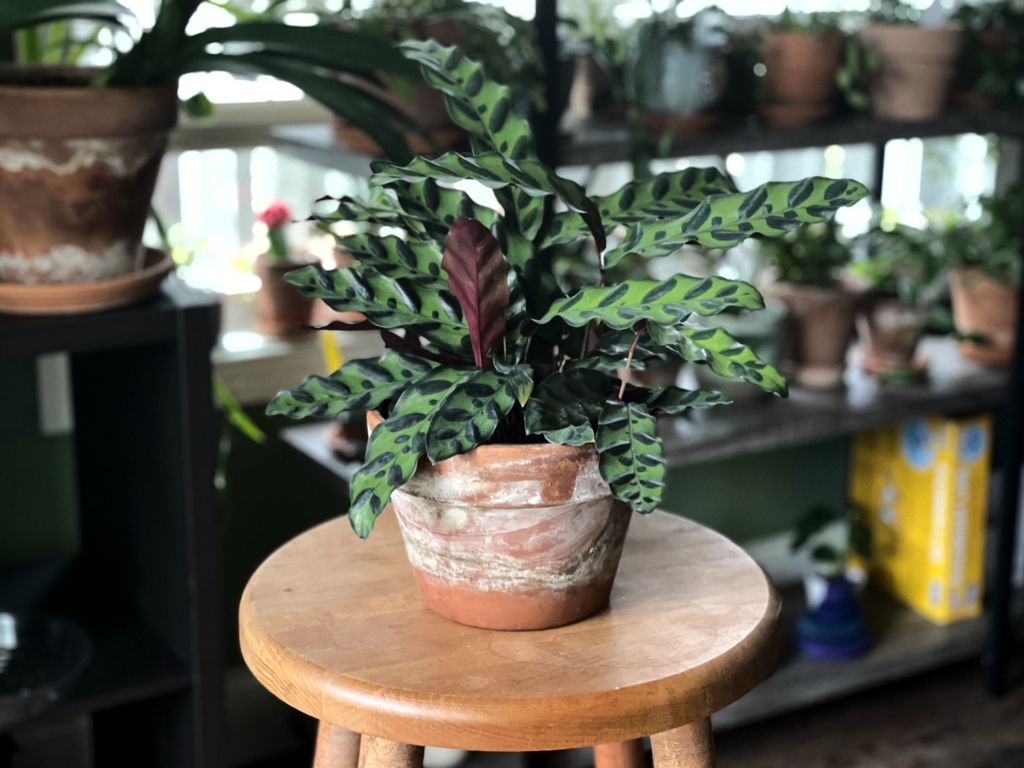

Why I like it: It’s beautiful, with its striking foliage patterns, and a lot of fun to watch, with foliage that moves throughout the day. The foliage closes up, like two hands coming together to pray, at night. And then opens again in the morning. That is where this kind of plant gets its common name, a prayer plant. The downside is that they can be a bit more difficult to care for, but we will discuss that in the care section!
Safe for pets? Yes
Safe for kids? Yes
Care difficulty? Moderate – it is a bit of a diva
Basic care info:
Calatheas are known to be a bit fussy, because of their watering needs. So we will start there. They do not like to dry out and if they do, their leaves will often crisp around the edges. They are also sensitive to tap water and the minerals in it. You can use distilled water for them or you can use water with a dechlorinator (that’s typically used for fish tanks) added.
As soon as the top third of the pot begins to dry, they are ready to be watered again. You can monitor this with your finger or a moisture meter.
If you’ve got the watering right, the rest of their needs are pretty easy, in my opinion. They want light, but it doesn’t have to be excessive. Near a bright window is great. If they get a little direct sun, that’s great too. All day direct sun? Not great.
As for pots and potting mix: Any houseplant potting mix will work fine. If it’s a really dense mix with no added perlite or something, you could add a little. Otherwise, you could use it as is. Pick a pot with drainage holes that are NOT porous. In other words, try a plastic or ceramic or glazed terracotta, or anything that retains moisture. The pot should be only a bit larger than the root ball unless the plant is incredibly rootbound.
You can lightly fertilize throughout the year with a houseplant fertilizer. I would cut whatever the directed amount is in half since these guys are sensitive to minerals.
Calatheas are known to be susceptible to spider mites, so watch for those. They often appear as bits of dust on the tops or bottoms of the leaves. If you look closely or with a magnifying glass, you will see them move. You will also be able to see webbing between the leaves when the infestation becomes prolific.
Showering the plant thoroughly every few days for a few weeks will do a great job of caring for the spider mites inexpensively without doing a lot of harm to the plant.
Disclaimer
This advice may not work for every houseplant grower, but it works for me and my plants!
If you do something different that works better for you, share it in the comments below! That’s how we learn and grow as a community.
Related Posts
Is Your Houseplant Safe for Kids and Pets?
Are the Chemicals We Use to Control Houseplant Pests Safe for People and Pets?
0 Comments