
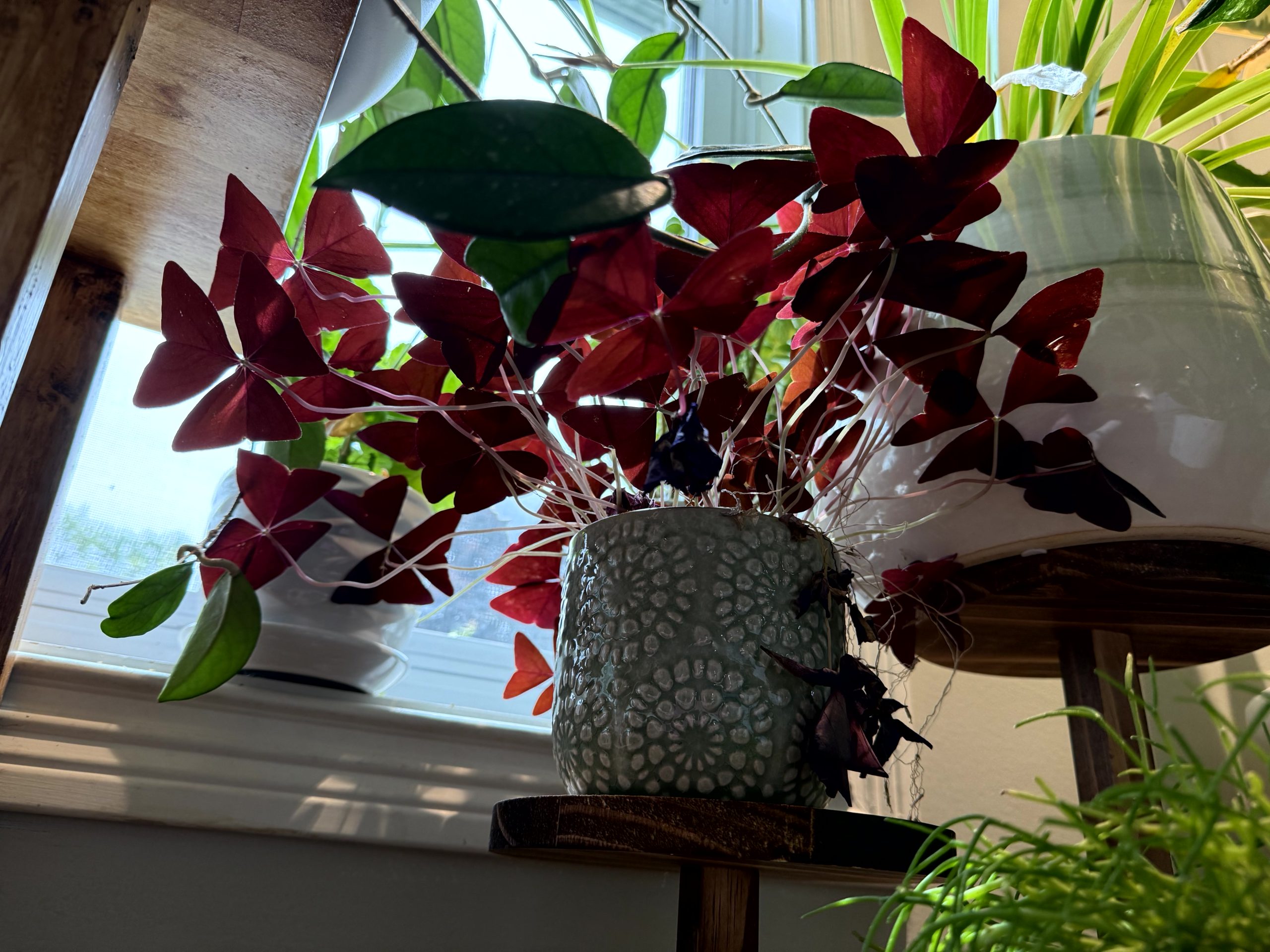

Watering houseplants is a tricky skill that takes time and practice to master.
Despite this, there are plenty of tips and tricks to help you start to learn when your houseplant needs to be watered.
Here’s the 2 Key Ideas to Watering Houseplants
The key to getting started with houseplant watering is to ask two important questions:
#1 How dry does my plant want to get before it is watered again?
#2 How do I know when it has reached that level of dryness and it’s ready for water?
The goal of this blog post is to help you answer both questions so you can water your houseplants more confidently.
How dry does a plant want to get before it is watered again?
Understanding how dry your plant prefers to get before watering is critical to successfully caring for it.
Houseplants, just like people, become thirsty and need water. If they are thirsty for too long, they become dehydrated and suffer. The longer they go without water, the more physical damage occurs.
If plants are watered too frequently, the air pockets in the soil remain compacted for too long, suffocating the plant roots. This feels a bit like drowning for the plant, whose roots need to breathe in oxygen just like we do.
Hopefully, that helps to explain why it is so important to know whether a plant needs water, rather than just watering when we remember to.
That said, please keep in mind that every person who successfully cares for plants has killed many, many, many plants. Myself included.
It takes many failures to learn how to get it right. So if you get it wrong or have gotten it wrong in the past, it’s all good.

Okay, so how do we know how dry a plant wants to get before watering?
The first thing we need to do is just look at the plant.
Desert Plants
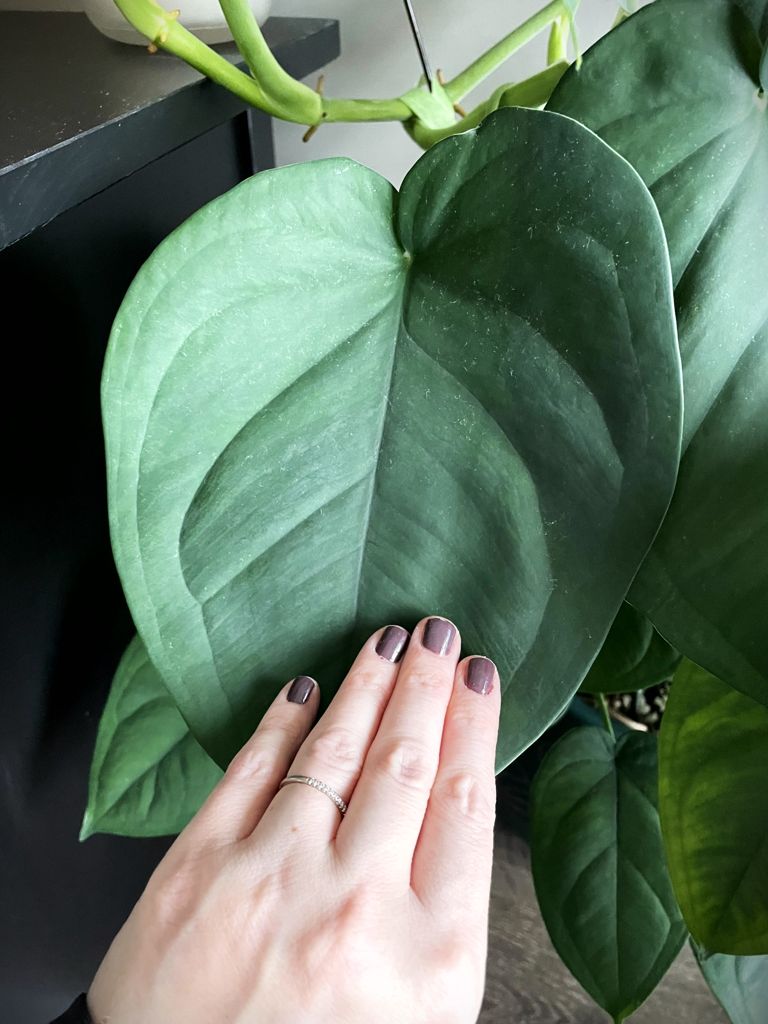
If the plant has no leaves, spines, or has super-chubby/succulent leaves, it’s probably a desert plant and is used to getting super dry before being watered again.
Ferns
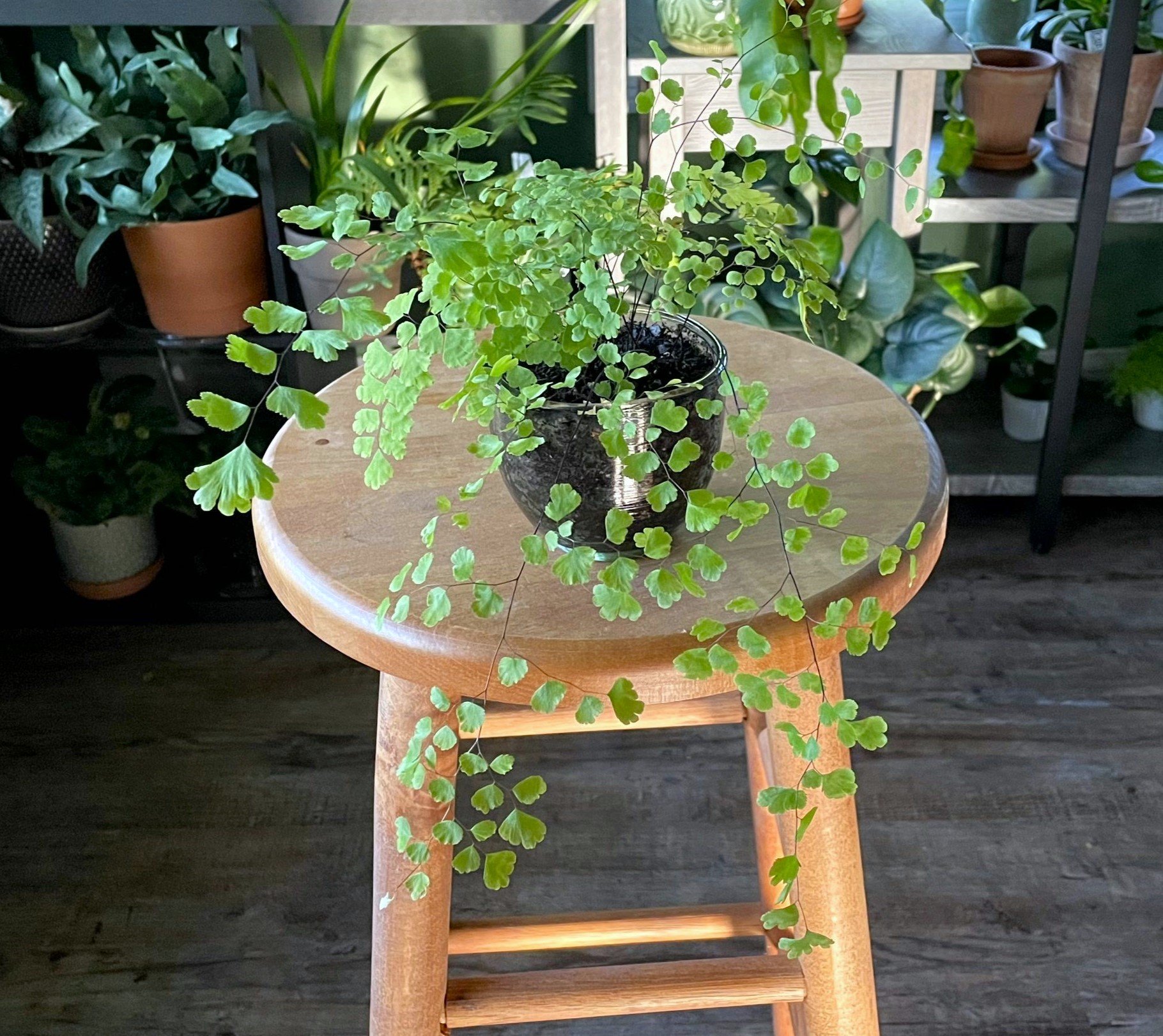
If the plant has very thin, delicate leaves that are small-ish and numerous, it’s probably a fern that is used to receiving very frequent waterings and wants to stay pretty moist at all times.
General Houseplants
If it isn’t one of those two and it isn’t an orchid, it’s likely in the general houseplant category.
Most of these houseplants do not want to get super dry before being watered (though many can survive it), but would rather have some moisture in the lower part of their pot and dry out a bit in the upper part. Then they’d like a nice, thorough watering.
Okay, great. But how in the heck do you know whether the plant is dry, or partially dry, or what have you?
Let’s talk about that next.
Orchids
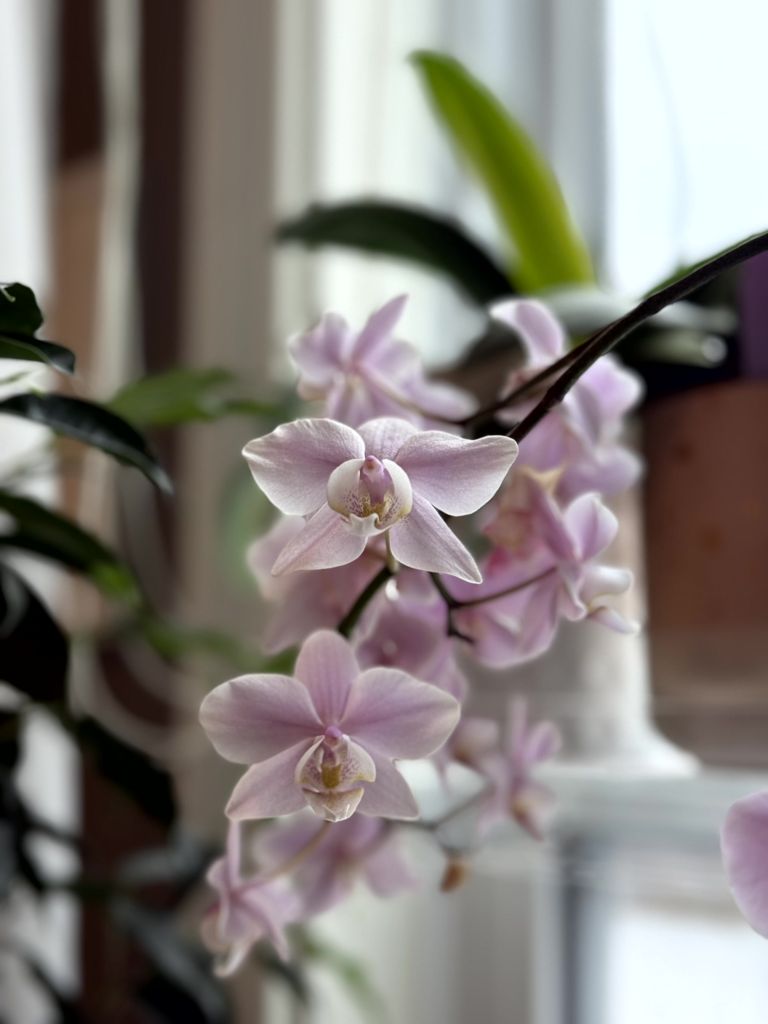
And if you need care info on orchids, click here for Phalaenopsis orchid care.


How do you determine whether a plant is dry enough to water again?
There are many ways to gauge how wet or dry a plant is. All of these can be used simultaneously or individually; it’s completely up to you.
The best way I’ve come up with to explain that you can use as few or as many of these methods to gauge moisture is to compare it to taking your own temperature:
Let’s say you use a thermometer under your tongue to check your temperature, but aren’t sure it’s accurate, so then you try a forehead thermometer, an ear thermometer, and perhaps even check under your arm.
Once done, you make a decision about whether you have a fever based on all the information you collected, rather than relying on a single test or device.
The same is true for deciding whether your plant is dry enough to water. You may choose to use only one method or many methods; at the end of the day, both work just fine if you feel pretty confident about when to water.
Methods of determine how dry a plant’s potting medium is:
- Finger Test
- The finger test is simple, but can be difficult at first.
- Push your finger into the potting medium and see if it feels wet.
- Sometimes the soil won’t feel wet but will feel cold, and it’s hard to tell whether it’s truly wet or dry.
- With practice, this gets easier – use the pinch test (and other methods) to help clarify confusing results
- Note: Our fingers can typically only go so deep in a pot, so this test is great for plants that do not want to dry out all the way (i.e. general houseplants)
- Pinch Test (pairs well with the Finger Test)
- Pinch a small amount of potting medium between your pointer and thumb.
- If the medium stays clumped when you release your fingers, there’s still moisture there. If it falls apart, it’s dry.
- This test is great to determine whether the top of the medium is dry (which is all you need for plants like ferns and water lovers) and is also helpful to provide more clarity if confused when poking your finger into the pot.
- Chopstick Test
- The chopstick test is also very easy. You take a wooden chopstick and push it down into the pot as far as you want to check the potting medium.
- For desert plants, you would push it down as far as possible.
- For general houseplants, you only need to check halfway into the pot.
- Once you’ve pushed it into the pot to the desired depth, then you slowly pull it back out.
- If the chopstick comes out clean, the medium is dry and ready to be watered.
- If the chopstick comes out dirty with the moist soil on it, the plant is still hydrated and does not need water quite yet.
- The chopstick test is also very easy. You take a wooden chopstick and push it down into the pot as far as you want to check the potting medium.
- Visual Test
- The visual test is either learning what the potting mix looks like when it is dry versus when it is wet OR learning what your plant looks like when it is thirsty versus when it is hydrated.
- Watering a plant when it looks dehydrated isn’t ideal, since it is so thirsty, but it is a good learning tool for understanding how often to water.
- Drainage Hole Test (great for desert plants that need to dry out all the way)
- For plants that want to dry out completely, you can feel the potting mix through the drainage holes on the bottom of the pot
- If the potting mix on the bottom is dry, water it
- If the potting mix isn’t, wait longer
- Moisture Meter
- Moisture meters are great tools for learning how to water, particularly if you aren’t using a fancier, chunkier soil mix
- Simply push the moisture meter into the pot as far in as you want to test
- When most houseplants show a 3-4 on the moisture meter, it’s time to water!
- Weight Test
- If a plant is still in its plastic nursery pot, checking the weight of the plant is a fantastic way to see how wet or dry it is
- Thoroughly watered plants are much heavier than plants that are nearly dry
- Simply pick the plant up and see how heavy it is
- Keep testing throughout the week; once it is noticeably lighter, it is time to water
As I mentioned before, water is a skill that takes a lot of practice to master. And even then, mistakes are common.
Don’t be afraid to make mistakes, get dirty, and be confused. It will get easier.
I know from personal experience.
Disclaimer
This advice may not work for every houseplant grower, but it works for me and my plants!
If you do something different that works better for you, share it in the comments below!
That’s how we learn and grow as a community.
Related Posts
Recap 2025: The Joy is in the Journey of Growing Houseplants
Decluttering Your Houseplants Will Make You Love Your Plants More. Here’s Why.
Exposing My Simple Pest Management System I Wish I Started Years Ago!
0 Comments